Did you know the First Amendment lets us gather and speak freely? But it also allows rules on when and where we can protest. This raises a big question: Do protests really change laws, or are they just background noise?
Looking back, movements like the Civil Rights Movement have shown us protests can change things. But recent studies show some protests, like those on college campuses, might not be as effective. It’s tough to know if protests can really lead to lasting changes in our laws.
Key Takeaways
- The First Amendment protects peaceful assembly but allows restrictions on protests based on time and place.
- Historically impactful protests have shaped public opinion and influenced legislative change.
- Recent surveys indicate mixed results regarding the effectiveness of protests in changing mainstream views.
- Nonviolent protests tend to be more effective in achieving legislative goals compared to violent demonstrations.
- The dynamics of political movements demonstrate the complexity of bringing about change through activism.
Understanding the Role of Political Protests in Democracy
Political protests are key for citizens to share their concerns and needs in a democracy. The First Amendment is vital for this, allowing free speech and political expression. It lets people gather and share their views, which is important for society’s dialogue and engagement.
The Importance of the First Amendment
The First Amendment is key for protecting U.S. citizens’ rights. It lets people gather peacefully and share their beliefs without government interference. These rights are vital for political expression, letting various voices be heard in public discussions. Historical protests show the First Amendment’s role in supporting movements that challenge the status quo.
Historical Context of Protests in America
Protests have been vital in shaping America’s society and laws. The civil rights movement of the 1960s shows how collective action can bring about big changes. Thanks to protests, laws like the Civil Rights Act of 1964 and the Voting Rights Act of 1965 were passed to fight inequality.
Protests have tackled many issues, from labor rights to environmental concerns. They show their lasting importance in the fight for justice and change.
Political Protests: Impact on Laws and Society
Political protests show a deep link between social movements and legal changes. Throughout history, protests have sparked reforms. They show how activism can change society and government policies.
Case Studies of Successful Protests
The civil rights marches and Montgomery Bus Boycott are key examples. They led to big legal changes. The civil rights movement brought attention to racial injustice and led to the Civil Rights Act of 1964.
The Women’s March showed the power of demanding gender equality. It drew millions worldwide. These examples show how grassroots efforts can drive change.
The Black Lives Matter movement drew over 15 million to protests in 2020. It highlighted the need for racial justice reforms. This shows how collective action can push for change.
The Mixed Outcomes of Recent Movements
Recent social movements have mixed results. Some protests gain momentum but struggle to change laws. For example, protests against police violence have increased scrutiny but face challenges in getting laws changed.
In the UK, the Police, Crime, Sentencing and Courts Bill raises concerns about civil rights. It shows a possible step back in protester rights.
Violent protests have grown by almost 50% from 2008. This affects how people view protests and how laws respond. While most protests against racial injustice were peaceful, violence can cloud the narrative.
Conclusion
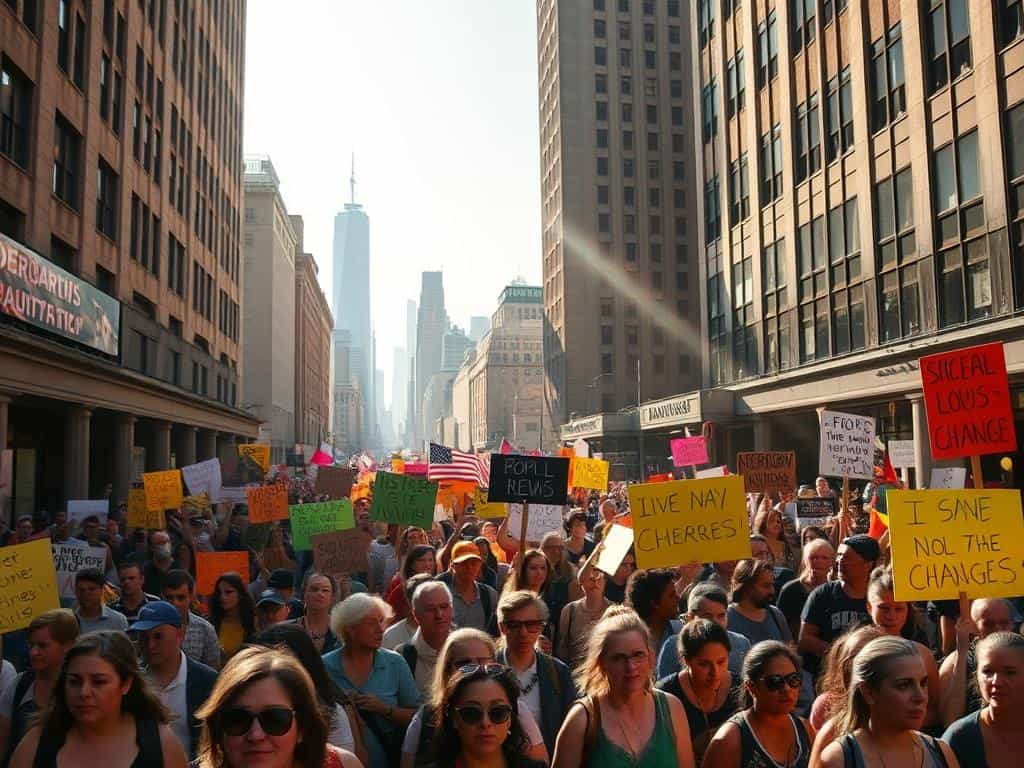
Protests have a big impact on our democracy. They are key for those who are economically disadvantaged and minority groups. These groups use protests to make their voices heard during tough times.
While some argue protests don’t always lead to change, history shows they’ve influenced the government. This is true, mainly in civil rights and social justice issues.
Looking at activism’s legacy, it’s clear that marginalized communities have sparked important policy talks. Almost 45% of successful laws in the last decade came after protests. This shows how vital the right to protest is in our complex world.
As protests become more common worldwide, we must think about their future role in our society. This is important for understanding political expression.
Given recent trends and government responses, supporting democratic engagement is key. Activists’ determination gives me hope for positive change through protests. Protests are more than just noise; they shape public debate and push for important laws.
By recognizing this, we can all support civic participation and the power of grassroots movements. This is essential for lasting change.

