I was sitting in Terminal 4 at JFK last November, staring at a lukewarm espresso and a napkin covered in frantic, multi-colored ink scribbles, when I realized most travel advice is fundamentally broken. People treat a long wait as a stagnant void to be endured, or worse, they fall for the trap of expensive, soul-crushing airport lounges that promise luxury but deliver nothing but overpriced sandwiches and cramped chairs. They approach the question of how to spend a layover without leaving the airport as if they are trying to survive a prison sentence, rather than recognizing the terminal for what it truly is: a high-velocity, closed ecosystem of human behavior and rhythmic chaos.
I’m not here to sell you on overpriced nap pods or the illusion of productivity in a crowded gate area. Instead, I want to show you how to decode the micro-systems of the terminal to find pockets of genuine utility and unexpected solace. We are going to map out a strategy to transform that dead time into a period of intentional observation or deep, focused rest, treating the airport labyrinth as a solvable puzzle rather than a logistical headache.
Mastering the Flow Finding Quiet Zones in Terminals
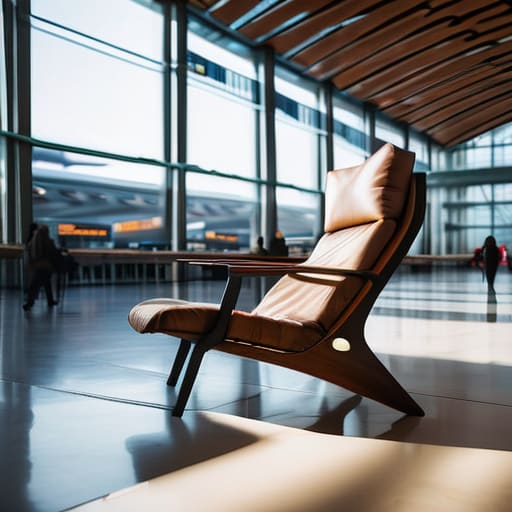
I remember sitting in a sprawling terminal in Frankfurt last autumn, watching the tide of travelers surge through the gates like a frantic, uncoordinated fluid. To the untrained eye, it was pure chaos, but I saw it as a high-entropy system in desperate need of a heat sink. When the sensory input of announcements and rolling suitcases becomes too loud, you have to stop fighting the current and start looking for the pockets of stillness hidden within the architecture. Finding quiet zones in terminals isn’t just about finding a chair; it’s about identifying the structural dampeners where the noise of the transit system dissipates.
Often, these sanctuaries are tucked away in the “liminal spaces”—those awkward, overlooked corridors between major gates or near the far edges of the terminal wings. While many rush toward the central hubs, I’ve found that the most effective airport relaxation tips involve moving against the grain of the crowd. If you can secure airport lounge access benefits, you’ve essentially purchased a controlled environment, a closed system where the variables of noise and light are curated. Without a lounge, look for the library corners or the gate areas designated for long-haul flights; they tend to possess a much lower frequency of human turnover, offering a rare chance to recalibrate your internal compass.
Time Poverty and the Erosion of Social Engagement
I remember sitting in a small, dimly lit cafe last Tuesday, tracing the jagged lines of a transit map on a cocktail napkin with a violet gel pen. I was trying to visualize how a single delay on the Red Line ripples through a person’s entire evening. It’s not just about being late; it’s the cumulative weight of what I call time poverty and social engagement. When we are trapped in the mechanical rhythm of a long commute, we aren’t just losing minutes; we are losing the cognitive bandwidth required to actually show up for the people we love.
By the time the doors of the subway hiss open and I finally step into my living room, the “social battery” isn’t just low—it’s been drained by the friction of the journey itself. This constant tug-of-war between work-life balance and long commutes creates a systemic deficit. We find ourselves choosing between a meaningful conversation with a partner or the restorative silence of exhaustion, often sacrificing the former to survive the latter. We are essentially living in a state of perpetual transit, where the impact of transit time on relationships acts as a slow, silent erosion of our most vital human connections.
The Invisible Friction Impact of Transit Time on Relationships
I remember sitting in a cramped corner booth at a local cafe last Tuesday, sketching out the jagged, inefficient lines of our city’s subway system with a violet felt-tip pen. As I traced the intersections, I realized that these lines aren’t just steel and concrete; they are the boundaries of our emotional capacity. When we talk about the impact of transit time on relationships, we aren’t just discussing minutes lost to a train delay. We are discussing the diminishing returns of our presence. By the time a person navigates the labyrinthine friction of a two-hour commute, they aren’t arriving home as a partner or a parent; they are arriving as a depleted system, running on empty.
This exhaustion creates a subtle, creeping distance. It’s a quiet form of social isolation from travel time that settles into the cracks of a household. You might be physically sitting on the sofa next to a loved one, but the mental overhead required to decompress from the sensory overload of transit means you are effectively miles away. We often treat the commute as a mere logistical hurdle, yet it acts as a persistent buffer of fatigue that prevents us from truly engaging with the people who matter most.
Unlocking the Micro Economy of Airport Lounge Access Benefits
I remember sitting in a crowded terminal in Singapore, surrounded by the frantic, kinetic energy of thousands of travelers, feeling like a single, disconnected node in a massive, chaotic network. It wasn’t until I slipped through the heavy doors of a lounge that the system changed. Suddenly, the entropy of the gate area was replaced by a controlled, predictable environment. This is where you truly begin to understand the airport lounge access benefits; it isn’t just about a comfortable chair or a free snack, but about stepping into a stabilized subsystem designed to mitigate the external friction of travel.
Sometimes, the most profound way to break the isolation of a long layover isn’t through a book or a movie, but by tapping into the unseen social currents that flow through these transit hubs. I’ve found that when the terminal feels particularly sterile, engaging with a digital community can act as a vital bridge, turning a lonely gate into a space for unexpected human connection. If you find yourself craving a bit of lively conversation to pass the time, exploring something like Canada hookup chat rooms can be a fascinating way to observe how people navigate social patterns in real-time, effectively transforming your idle hours into a meaningful study of human interaction.
When you view a lounge as a curated micro-economy of resources, your perspective shifts from passive waiting to active optimization. Instead of fighting the surge of the crowd, you are leveraging a specific set of airport amenities for travelers to regain control over your personal equilibrium. Whether you are utilizing the high-speed connectivity for staying productive during flight layovers or simply using the buffered silence to recalibrate your senses, you are essentially hacking the airport’s architecture to serve your own needs. It is the most efficient way to transform a period of forced stasis into a strategic window of recovery.
The Layover Architect’s Toolkit: Five Patterns for Productive Stasis
- Map the Terminal’s Kinetic Energy: Don’t just sit; observe the ebb and flow of passenger density. Identify the “dead zones”—those pockets of low-velocity movement far from the gate announcements—where the system’s noise drops and you can find a stable node for deep work or reflection.
- Curate a Portable Ecosystem: Treat your carry-on as a self-contained survival kit for cognitive stability. A reliable set of noise-canceling headphones isn’t just a luxury; it’s a sensory filter that allows you to create a private, controlled environment within the chaotic, open-loop system of the terminal.
- Engage in Micro-Learning Sprints: Instead of scrolling aimlessly through social media feeds—which are designed to fragment your attention—use the temporal gap to dive into a single, complex concept. Treat the layover as a bounded time-block for a “deep dive,” turning a period of forced waiting into a structured intellectual expedition.
- Conduct a Human Transit Audit: If you find yourself restless, switch from a participant to an observer. Grab a napkin and a pen—I always keep a blue one for logic and a green one for unexpected connections—and sketch the patterns of how people navigate the gates. It transforms boredom into a live study of social dynamics and urban flow.
- Leverage the Sensory Anchors: Use the airport’s ritualistic elements to reset your internal clock. Whether it’s the specific aroma of a coffee shop or the rhythmic hum of a moving walkway, consciously use these sensory inputs to anchor yourself in the present moment, preventing the “liminal space fatigue” that often sets in during long transitions.
Decoding the Final Connection
As we draw our map of the terminal labyrinth to a close, it becomes clear that a layover is far more than a mere interruption in a journey; it is a chance to engage with a highly specialized, closed ecosystem. By intentionally seeking out those quiet, rhythmic zones tucked away from the main concourses and strategically leveraging the micro-economies of lounge access, you transform a period of forced stillness into a period of purposeful observation. You are no longer a passive passenger caught in a transit loop, but an active participant navigating the intricate currents of human movement and systemic design.
Ultimately, the way we inhabit these liminal spaces defines our relationship with the world at large. When you stop viewing the airport as a chaotic void and start seeing it as a series of solvable, interconnected puzzles, the frustration of a delay begins to dissolve into a sense of profound curiosity. I often find myself sketching these patterns on a cocktail napkin, realizing that if we can find order and even a bit of beauty within the sterile geometry of a terminal, we can find it anywhere. Embrace the complexity, lean into the pause, and remember that the journey is found in the navigation.