I was sitting in a cramped corner of a café in downtown Chicago last Tuesday, sketching out the chaotic flow of the ‘L’ train on a paper napkin with my favorite teal pen, when I realized how much the city’s heartbeat has shifted. For decades, we treated urban centers like massive, inescapable gravity wells, assuming everyone had to be tethered to a specific zip code to be productive. But the old economic models are breaking, and the chatter about how remote work changed where people live often misses the actual systemic shift happening beneath the surface. It’s not just about people moving to the suburbs; it’s a fundamental decoupling of geography from opportunity, a reconfiguration of our entire human landscape that most pundits are too shallow to grasp.
I’m not here to feed you the usual platitudes about “digital nomadism” or the utopian fantasy of working from a beach. Instead, I want to pull back the curtain on the actual mechanics of this migration. We are going to look at the cascading effects of this shift—from the sudden death of the downtown lunch rush to the unexpected blooming of small-town ecosystems. My promise to you is a deep, no-nonsense dive into the patterns of this new world, helping you navigate this changing map with a clear, systemic lens.
The Decentralization of the Workforce and Human Connection
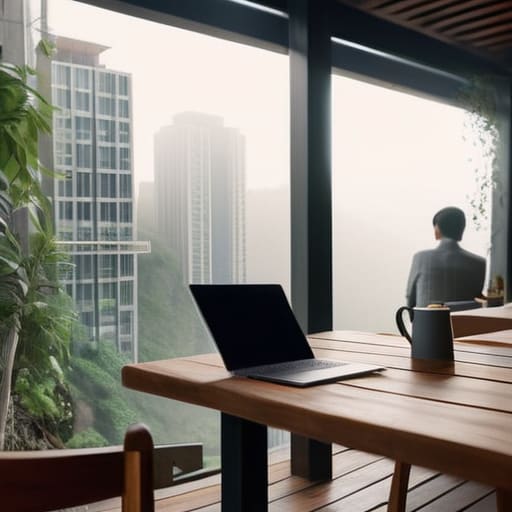
I remember sitting in a corner booth at a café in downtown Chicago a decade ago, watching the rhythmic, almost mechanical pulse of the morning commute. It was a closed loop—a massive, centralized system where human energy was funneled into a single, dense core every single day. But lately, as I’ve been sketching out the new flows on my napkins, that loop has begun to fray, or perhaps more accurately, to expand. We are witnessing a profound decentralization of the workforce, where the rigid gravity of the central business district is losing its pull. People are no longer tethered to the expensive, high-density nodes of the past; instead, they are seeking equilibrium in spaces that offer more than just a cubicle and a commute.
This shift isn’t just about avoiding traffic; it’s a systemic reconfiguration of how we inhabit the earth. We are seeing a dramatic rise of secondary cities—places that were once mere satellites or sleepy outposts—as they suddenly become the new hubs for talent and creativity. As the boundaries of the “office” dissolve, the very architecture of our social lives is being redesigned. We aren’t just moving houses; we are participating in a massive, unscripted experiment in how human connection survives when the physical anchors of our professional lives are stripped away.
Digital Nomadism and Urban Migration Redrawing the Map
I remember sitting in a cramped, sun-drenched cafe in Lisbon last autumn, sketching a frantic web of connections on a paper napkin with my cobalt blue pen. I was watching a group of developers from San Francisco sharing espresso with local artisans, a scene that perfectly illustrated the friction and fusion of digital nomadism and urban migration. We aren’t just seeing people move; we are witnessing a systemic reconfiguration of how human capital flows through the world’s arteries. The old gravity of the “megacity” is weakening, as the necessity of physical proximity to a central hub dissolves into a more fluid, distributed network.
This shift is fueling a fascinating rise of secondary cities—places that were once mere footnotes in the global economic narrative but are now becoming vital nodes in a new, decentralized web. As people leverage their geographic flexibility and housing choices, they are injecting new energy into mid-sized towns and coastal enclaves that were previously overlooked. It’s as if the entire map is being redrawn in real-time, moving away from dense, singular clusters toward a more resilient, multi-nodal architecture of human settlement.
Navigating the New Topography: Five Strategies for the Great Reconfiguration
- Seek Out Micro-Hubs over Macro-Metropolises. As the gravity of the central business district weakens, don’t just flee to the wilderness; look for the “middle-tier” nodes—smaller towns with robust digital infrastructure and a sense of communal density. These are the new waypoints in our evolving human network.
- Map Your Social Infrastructure Before Your Physical One. In the old system, community was a byproduct of proximity to work. In this decentralized model, you must intentionally design your social landscape. Before committing to a new zip code, audit its “connection potential”—the cafes, third spaces, and local networks that will serve as your new cognitive anchors.
- Embrace the “Hybrid Lifestyle” Fluidity. Stop viewing your location as a fixed coordinate and start seeing it as a variable in a larger equation. Use seasonal migration to balance your need for high-intensity urban stimulation with the restorative stillness of rural environments, preventing systemic burnout.
- Prioritize Digital Resilience in Your Selection Process. In a world where your livelihood is untethered from a physical desk, bandwidth is more than a utility; it is your lifeblood. When scouting new territories, treat fiber-optic availability with the same scrutiny you would once have given to proximity to a subway line.
- Cultivate “Local-Global” Integration. Avoid the trap of the digital bubble, where you live in a beautiful place but only interact with a screen. To truly thrive in this new geography, you must find ways to weave your global professional identity into the local socioeconomic fabric, ensuring you are a participant in your new system rather than just a transient observer.
Mapping the Uncharted Territory
As we sit here, tracing the new ley lines of our global settlement patterns, it becomes clear that we aren’t just witnessing a change in commuting habits; we are witnessing a fundamental recalibration of the human ecosystem. We’ve seen how the tether of the traditional office has unspooled, allowing for a massive decentralization that breathes life into forgotten rural corners while simultaneously challenging the very soul of the dense urban core. From the rise of the digital nomad to the quiet migration toward scenic landscapes, the old maps are being folded up and put away. We are moving away from a world defined by rigid, centralized hubs and toward a fluid, distributed network of living, working, and connecting that defies the old logic of proximity.
Ultimately, this shift invites us to stop viewing our surroundings as static grids and start seeing them as living, breathing labyrinths of opportunity. The disappearance of the mandatory nine-to-five commute is more than a logistical shift; it is a chance to design lives that are more intentionally integrated with our environments. As you navigate this new terrain, I encourage you to look past the surface-level chaos of these changing demographics and seek out the underlying patterns of connection. We are the architects of this new geography, and while the old paths may have faded, the new connections we forge will define the resilience and beauty of our shared human journey.
As we drift away from the rigid, centralized hubs of the past, we find ourselves navigating a much more fluid social landscape, one where the old anchors of community are being replaced by intentional connections. It’s no longer about being proximity-bound to a corporate headquarters, but rather about seeking out the specific nodes where our personal interests and new environments intersect. If you find yourself recalibrating your social compass in a new territory, I’ve found that tapping into niche, localized digital spaces can be a vital way to bridge that gap; for instance, exploring a local chat Atlanta can offer a fascinating glimpse into how micro-communities are forming and sustaining themselves within the larger, shifting urban fabric.