In today’s world, tech giants watch over billions of people. In 2022, spending on surveillance tech hit over $100 billion. This makes us think of George Orwell’s “Nineteen Eighty-Four” and how our privacy is sold with every click.
It’s clear we’re not just dreaming of a nightmare. The truth is, government spying and Big Brother’s watchful eye are real. This article explores how our privacy is at risk, linking it to Orwell’s dark future and today’s politics.
Key Takeaways
- Surveillance technology spending surpassed $100 billion in 2022.
- Big Tech companies operate on a model resembling Orwell’s *Big Brother*.
- Privacy concerns are rising as personal data is commodified.
- Government spying has become increasingly normalized in many societies.
- Parallels can be drawn between Orwellian themes and contemporary governance.
The Rise of the Surveillance Society
The idea of a Surveillance Society has grown over time. It has changed with new technology and what people need. At first, societies used simple ways to keep track of people. As technology got better, so did the ways to watch and control people. This change is key to understanding today’s surveillance.
Historical Context of Surveillance in Society
For a long time, governments have used surveillance to keep control. In old times, they used informants to watch over people. As we moved into the modern era, they started using more organized methods. This led to the use of advanced technology and collecting lots of data.
The early days of computers made it easier for groups to watch more people. Now, billions of records are gathered every day.
The Role of Big Tech in Modern Surveillance
Big Tech companies like Google and Facebook are big players in today’s Surveillance Society. They collect a lot of personal data without people knowing. This change is part of what Shoshana Zuboff calls *Surveillance Capitalism*. It’s when our actions are used for money.
The mix of private and public sectors makes privacy concerns grow. Technology lets them get more data than ever before.
Government Spying and Personal Privacy
Government spying adds another layer to this issue. Programs like those by the NSA have made people worried about privacy. Only about 20% trust the government to not spy on them.
The loss of legal protections has made things worse. For example, a Supreme Court ruling about data shared with others has raised more fears. Now, government agencies have a lot of data.
Comparing Orwell’s Vision to Today’s Reality
George Orwell’s Nineteen Eighty-Four shows a dark view of total control. It talks about governments going too far, changing facts, and making people less human. Today, we see these ideas in our world, where governments and tech control us more than ever.
Key Themes in Nineteen Eighty-Four
In Nineteen Eighty-Four, the government watches everyone all the time. This is like the CCTV cameras in our lives today. They’re in schools, hospitals, and streets. People watch a lot of TV, about 8 hours a day, making us more watched and controlled.
Orwell warns us about how information is used to control. Today, media shapes what we think and believe.
Parallels Between Orwell’s Setting and Contemporary Governance
Today, big social media acts like the government in Nineteen Eighty-Four. They decide what we can say online. If we say something wrong, they can take it away, just like thoughtcrimes in the book.
We use tech to stay informed but also to watch us. This shows how Orwell’s ideas are real today. Our phones watch us, making us question privacy and how we’re controlled.
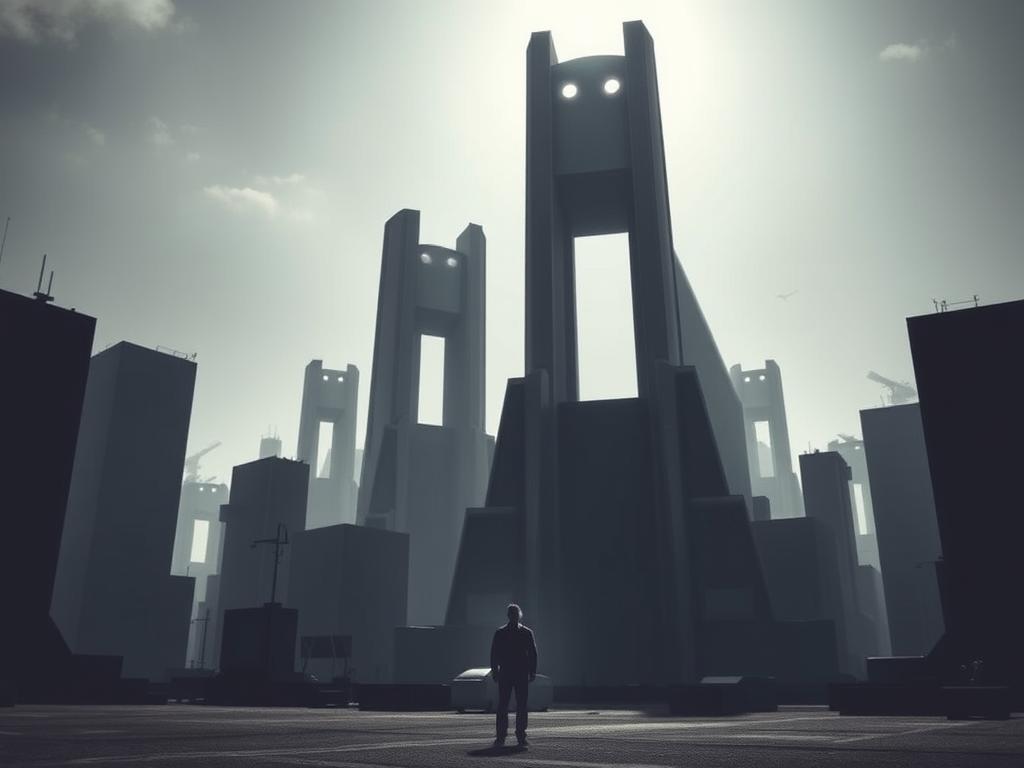
The Impact of Government Spying and Big Brother Tactics
Government spying and Big Brother tactics have sparked a lot of talk. This talk grew after Edward Snowden revealed the US surveillance in June 2013. People started to see how government actions online could limit their freedom. Surveys show over half of people in countries with lots of internet think their governments watch their online moves.
Public Reaction to Surveillance and Privacy Concerns
Many people feel uneasy about being watched. A big 28% of folks avoid posting on social media, and 24% are careful with what they say in emails or phones. This shows a fear of losing freedom to speak openly. In 2013, 86% of internet users tried to hide their online tracks, showing they don’t trust privacy protection.
Even though half think the internet is safe for free speech, privacy worries are strong. This fear makes people hesitant to share their thoughts online.
The Effect on Individual Freedom and Democracy
Government spying does more than just hurt privacy; it shakes the foundation of democracy. Surveillance has made people distrust government, making it hard to speak freely. Cases like NAACP v. Alabama show how surveillance can harm civil rights.
This fear stops people from getting involved in democracy. There’s a growing call for changes to protect freedom and democracy. Many groups want policies that keep individual rights safe.
Conclusion
We are living in a world that feels like an Orwellian nightmare. Surveillance and privacy concerns are everywhere. The NSA’s Utah data center shows how our privacy is at risk.
This situation makes us think about our personal space and its value. It’s important to understand the impact of constant monitoring and control.
Government spying has serious effects on our democracy. Cases like Clapper v. Amnesty International USA limit our ability to question these actions. This raises big questions about our future.
Surveillance can harm our freedom and silence dissent. It’s a warning about what happens when our lives are watched closely.
We must fight for our rights in this surveillance society. We need to hold governments and companies accountable. Privacy is a basic human right we must protect.

