Did you know people who watched a lot of news after the Boston Marathon bombings felt more stressed? The average American spends about 11 hours a day looking at screens. This makes us wonder: Are news outlets controlling what we think?
In our world filled with media, big news stories can change our opinions and feelings a lot. I will look into how false headlines and propaganda can change what we think, often without us noticing. It’s important to understand how mass media tricks work, both on purpose and by accident, in today’s world where lies can spread fast.
These tricks can change how we see things and what we believe. They can even shape what society thinks. So, it’s key to figure out how the media shapes our thoughts.
Key Takeaways
- Media can significantly influence emotional responses and perceptions through pervasive coverage.
- Overexposure to negative news often correlates with increased levels of stress and anxiety.
- Intentional and unintentional misleading headlines can distort public understanding of critical issues.
- The rise of social media has changed the way news is produced and consumed, amplifying misinformation risks.
- Trust in traditional media is declining, potentially compromising public engagement and knowledge.
Understanding Media Manipulation Tactics
Media manipulation tactics are strategies to change public opinion. They range from clear lies to subtle ways of framing information. Knowing how these tactics work helps us understand the news better.
How Headlines Influence Your Perception
Headlines are the first thing we see in news articles. They greatly affect how we engage with the content. Studies show that even slightly wrong headlines can change how we remember information.
Clickbait uses sensational language to grab our attention. This can make us believe false information. It’s key to question not just the content but also the headlines that shape our views.
Role of Propaganda in News Media
Propaganda has shaped media for centuries, affecting politics and society. News outlets focus on certain topics, guiding public discussions. This can be through repeating themes or framing complex issues in a narrow way.
Historical examples, like the “Daisy” ad in 1964, show propaganda’s power. Today, groups use similar tactics to create the illusion of widespread support. They manipulate trends and algorithms to influence public opinion.
The Impact of Social Influence on News Consumption
Mass media does more than just share news. It shapes how we see the world and what we think. Social influence plays a big role, like during elections when media stories can change our opinions. Studies by Courchesne et al. (2021) show how media can trick us into changing our views.
How Mass Media Shapes Public Opinion
Mass media has a huge impact on what we think. News can stick with us for years, and social media shares it fast. Sites like Facebook and Twitter spread news quickly, good or bad.
Trust in journalism has dropped a lot, starting in 2016. More people are getting news from social media instead of old ways. This has led to more “fake news,” hurting trust in real journalism.
Media’s strength is in telling stories that stick with us. The American Psychological Association says social influence can change us. Media’s messages can make us think and act differently. Today, media aims to influence us on a big scale, shaping our views and actions.
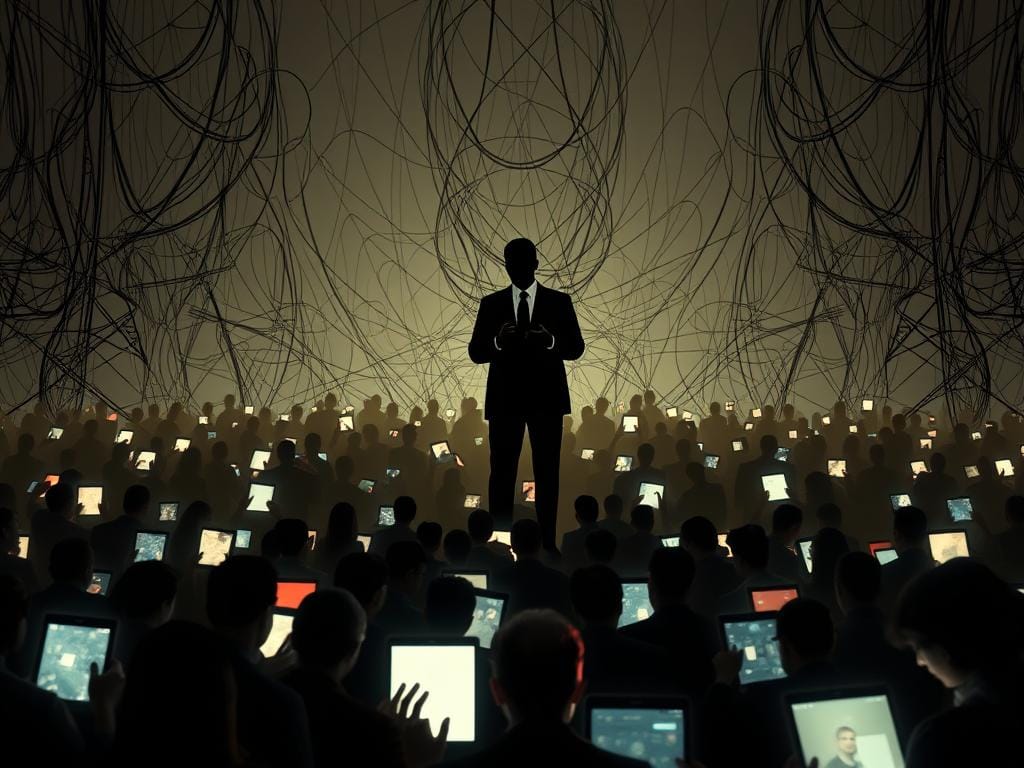
Conclusion
As we explore the complex world of modern media, it’s key to understand how our views are shaped. The work of Joseph Goebbels and Adolf Hitler shows how propaganda can change public opinion. This makes me think about how I consume media.
Techniques like “guilt by association” and blending truth with lies show how information can be used to harm. These methods have big effects on both people and society.
In today’s fast-paced world, it’s important to know how to spot fake news. Digital lies and synthetic media are serious threats. This means we need to be careful about what we read and watch.
Learning to spot manipulation through labeling and repetition is vital. It helps us understand how our views are shaped. This knowledge helps us make better choices and stand up for truth.
Creating a culture that values deep thinking and analysis is essential. By questioning what we’re told and being careful with information, we can help others be more informed. Let’s work together to build a society that values critical thinking and media literacy.

