Did you know Ukraine lost 30-35% of its GDP in the first year of its conflict? This is the biggest recession in Ukraine’s history. Wars have far-reaching effects, impacting the global economy deeply. The ongoing conflict in Ukraine and tensions in the Middle East have changed economic policies and stability.
These times of high uncertainty have harmed global trade, raised inflation, and disrupted supply chains. The Cost of War is real, affecting military spending and daily life. For example, oil price hikes have increased inflation, hurting business confidence and future growth.
Exploring this complex issue shows that war’s effects will last for years. It changes the economic landscape in profound ways.
Key Takeaways
- Ukraine’s GDP loss during the conflict was among the largest in its history, illustrating the severe economic impact of war.
- Increased military spending often leads to cuts in essential social services, affecting vulnerable populations.
- The disruption of global trade routes exacerbates inflation and food insecurity, with millions facing crisis-level conditions.
- Geopolitical tensions significantly influence oil prices, impacting the broader economy.
- Understanding the links between military action and economic stability is essential for future policy-making.
Understanding the Economic Impact of Wars
Wars have deep and wide-reaching effects on economies, both locally and globally. They impact many areas, including inflation, trade, and supply chains. The costs of military actions are not just immediate but also long-lasting.
Direct Costs of Military Engagement
When resources go to war, they take away from important areas like education, healthcare, and infrastructure. By 2009, the Iraq war had cost the US an estimated $860 billion. This shows the tough choices governments face during conflicts.
The destruction and loss of life in wars also add to the economic toll. These effects can last for years, hurting the economies of affected countries.
Inflationary Pressures from Conflict
Wars can cause inflation to rise. For example, the US Civil War led to money printing and high inflation. During World War II, U.S. inflation went up due to government spending and worker shortages.
The Gulf War saw oil prices jump from $21 in July to $46 in October. This shows how quickly costs can rise in conflicts, affecting not just the countries involved but the world market too.
Disruption of Global Trade and Supply Chains
Wars can disrupt global trade and supply chains. For instance, Houthi attacks on ships in the Red Sea caused big delays and a 260 percent rise in shipping costs. Such disruptions can lead to lower trade volumes, higher costs for businesses and consumers, and instability in the global economy.
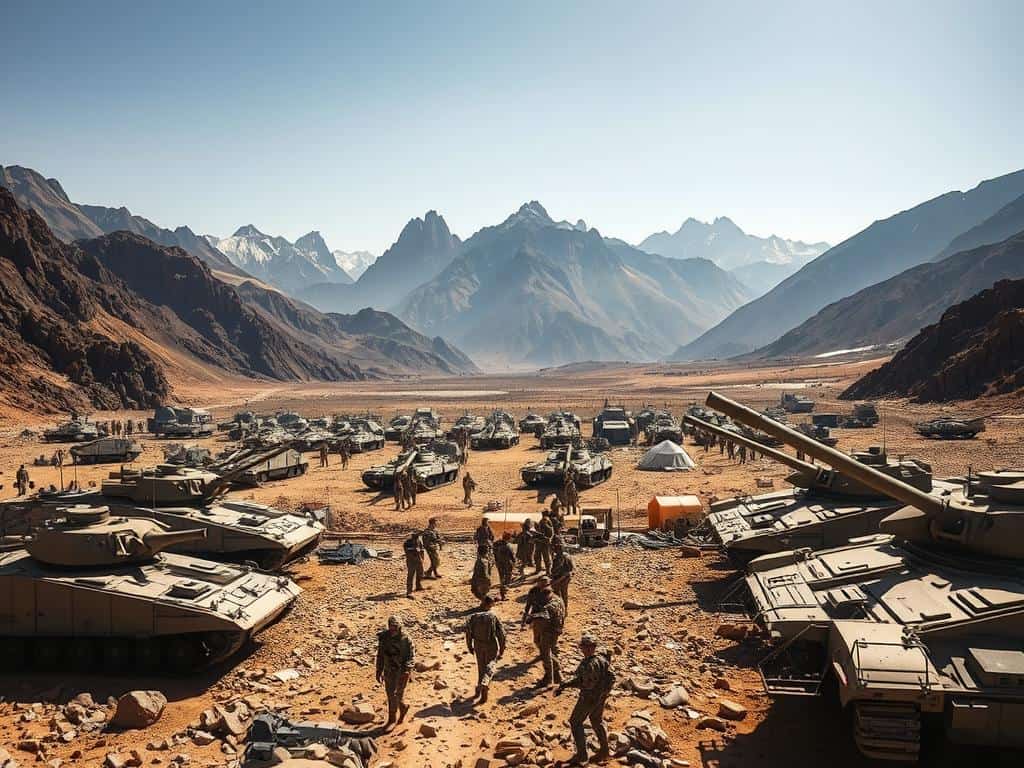
The Cost of War: Military Spending and Economic Stability
War’s financial impact goes beyond the battlefield. It affects national budgets, society, and the economy. As defense budgets rise, it creates big challenges for economic stability. Spending more on the military often hurts other important areas, leading to tough talks about government spending and social services.
Increased Defense Budgets and Their Implications
Nations at war often see their defense budgets grow. This can slow down economic growth. Research shows a 1% increase in military spending can cut growth by 9% over 20 years.
Wealthier countries in the Global North are hit harder. This makes it harder for them to recover and stay stable. Moving funds from important public goods to the military creates budget problems.
Impact on Government Spending and Social Services
As defense budgets grow, social services get less money. This means less for education, healthcare, and building infrastructure. Neglecting these areas hurts people’s well-being and future growth.
People worry about the economy, showing a gap between military needs and social welfare. This highlights the tension between military spending and helping society.
Refugee Crises and Economic Strain on Neighboring Countries
War often leads to refugee crises, straining nearby countries’ economies. These countries face pressure from refugees, lacking resources and services. Integrating refugees and meeting their needs adds to the economic burden.
This burden can harm local economies and slow down growth. It’s a big challenge for these countries.
Conclusion
Wars have big effects on the global economy. They cost a lot of money, like the $4 trillion the U.S. spent in Iraq and Afghanistan. These costs hurt people and the economy for a long time.
Wars also hurt trade and make it hard to keep the economy stable. When we spend more on the military, prices go up. This changes how we do business worldwide. It also makes it hard for countries to take care of their people and deal with refugees.
We need to think about the future and find ways to stop wars. By working on peace and diplomacy, we can lessen the harm wars cause. Understanding the economic effects of war is key to a better future for everyone.

