Did you know that there’s about $350 billion for federal highway programs from 2022 to 2026? This big increase in spending shows we really need to fix our roads and bridges. But, as I look into how these funds are used, I start to wonder if they’re being used right.
Before, the Trump administration stopped funding for a while. Now, new laws like the Bipartisan Infrastructure Law and the Inflation Reduction Act want to change that. They aim to make our roads, bridges, and community projects better for the future.
Looking into this, it’s not just about the money. It’s about helping local economies and fixing big gaps in funding. We can see where the money goes with tools like Grist’s ZIP code map. This helps us understand how it affects every community in America.
Key Takeaways
- Approximately $350 billion is set for federal highway programs under the Infrastructure Investment and Jobs Act.
- The Bipartisan Infrastructure Law and the Inflation Reduction Act are key in directing big funding to important projects.
- An estimated investment gap of nearly $2.6 trillion looms over U.S. infrastructure over this decade.
- Tools like Grist’s ZIP code map track the allocations of infrastructure funds at a local level.
- Efficiency of fund distribution remains critical, given past federal funding freezes.
Understanding the Infrastructure Spending Landscape
The United States’ infrastructure spending has changed a lot with the Bipartisan Infrastructure Law. This law is a big step towards fixing our infrastructure problems. It’s a key moment for federal funding in many areas.
The Role of the Bipartisan Infrastructure Law
The Bipartisan Infrastructure Law is a huge deal, with about $1.2 trillion in funding. $550 billion of that is for new infrastructure over five years. Most of it, almost 80%, is for grants to fund projects.
It focuses on roads, bridges, and clean energy. This helps the economy grow and helps local communities. The law also helps states with the biggest infrastructure needs. It uses a competitive process to pick the most impactful projects.
Climate Initiatives and Community Projects
Climate change is a big focus of the Bipartisan Infrastructure Law. It funds clean energy projects to fight climate change. It also helps community projects to make them more resilient to environmental issues.
This law does more than just fix current problems. It also helps the economy and the environment in the long run. It’s all about making sure local infrastructures are ready for the future.
Key Areas for Infrastructure Investment
A lot of money is going into roads and bridges under the Infrastructure Investment and Jobs Act (IIJA). This is because these are key parts of our infrastructure that need fixing. About $1.2 trillion is set aside for this, with $550 billion for new projects.
Over $91.2 billion will go to fixing public transportation. This means our roads and bridges will be ready for today and tomorrow’s challenges.
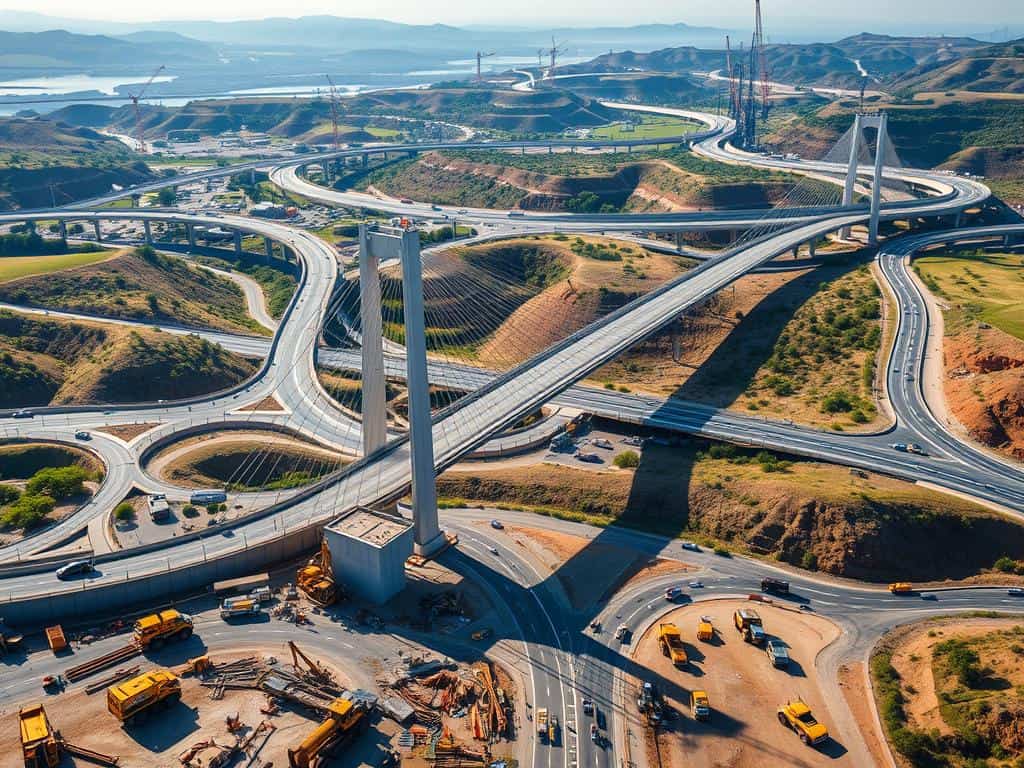
Public works are vital for building strong communities. There are plans to improve public transit and make more clean energy available. More than $16.7 billion will go to ports and waterways.
There’s also $7.5 billion for electric vehicle charging. The goal is to have 500,000 chargers across the country. This helps the environment and boosts the economy.
The IIJA makes sure states get funding based on need, not just size. This means poorer states get more help. The Justice40 Initiative also makes sure 40% of funds go to disadvantaged areas. This is a big step towards fair investment in infrastructure.
Trends in Infrastructure Spending
In recent years, spending on infrastructure has seen historic lows. This has raised big concerns about the health of our national infrastructure. The need for recovery efforts is clear, aiming to boost investments and fix old infrastructure across the U.S.
The Bipartisan Infrastructure Law (BIL) marks a significant shift. It allocates $1.2 trillion for projects in transportation, energy, and climate. This big push aims to fix decades of underinvestment in U.S. infrastructure.
Historic Declines and Recent Recovery
State and local spending on capital has grown by 1.6 percentage points. This is the biggest increase in 40 years. Yet, 42 states saw their infrastructure spending drop from 2009 to 2021.
The BIL brings new hope with its funding. It promises to support vital projects and help areas that have been left behind. The funding strategy is designed to help those most in need.
The Impact of Federal Funding on Local Economies
The BIL focuses on boosting local economies. It aims to create jobs and grow economies in areas that have been left behind. Over $350 billion has been allocated for projects like roads and bridges.
States with lower infrastructure grades get more funding per person. This shows a clear effort to close the investment gap. This focus not only boosts the economy but also helps local communities grow and thrive.
Conclusion
The Bipartisan Infrastructure Law and the Inflation Reduction Act are big steps forward. They aim to tackle the U.S.’s infrastructure problems. With $1.2 trillion for roads, bridges, and public services, we’re set for big changes in local economies.
This spending is all about making sustainable, long-term investments. It’s a chance for strong economic growth and jobs in areas that really need them.
Looking at the impact of these efforts, it’s clear that how we use the money matters a lot. Past projects have shown they boost the economy right away and even more over time. It’s important to make sure resources are spread out fairly to meet future needs.
The need for better infrastructure is urgent. I’ll keep an eye on how these efforts do and push for smart investments. With the right approach, these funds can change our infrastructure and lead to a better future.

