Surprisingly, 70% of parents worry that too much screen time hurts their kids’ sleep. This shows how deeply screens have become part of kids’ and families’ lives. It’s amazing how quickly play and interaction have changed with smartphones and digital devices.
Playgrounds and outdoor fun are now less common, replaced by screens. The move from social play to screen time has brought challenges. Kids aged 8 to 12 spend 4 to 6 hours a day on screens, and teens spend even more.
This has led to more anxiety and loneliness in kids. The technology meant to connect us has actually made us feel more alone. This is a big challenge for parents today.
Screens can also make it harder for kids and parents to connect. I often think about how we can have a better relationship with technology. With 60% of parents saying their kids have seen bad content online and 25% facing cyberbullying, it’s clear we need to guide them.
Parenting in the digital age is getting harder. We need to find ways to deal with the risks and benefits of screens for our kids.
Key Takeaways
- 70% of parents are concerned about screen time affecting sleep.
- Children aged 8 to 12 spend an average of 4 to 6 hours on screens daily.
- The use of screens is linked to a 30% increase in childhood obesity rates.
- Only 40% of parents monitor their children’s online activities.
- Teaching digital literacy is seen as essential for successful futures by 80% of parents.
- 50% of parents report that technology interrupts family interactions multiple times daily.
The Rise of Screens and Their Influence on Childhood
Screens have changed how kids play, interact, and socialize. These changes are key to understanding the screen time impact on today’s children. Devices have made play less active and less about talking face-to-face.
Transformation of Play and Social Interaction
Nowadays, kids prefer digital play over old-school activities. They often choose virtual worlds over playing outside. This is worrying, as it means less physical activity and less time with real friends.
Studies show kids aged 3 to 5 watch screens for 2 hours a day. Sadly, only 15% of them watch less than an hour, as recommended. This shows a big gap between screen time and healthy play.
Shift from Outdoor to Indoor Activities
Kids now prefer staying indoors to playing outside. This change is part of a bigger trend in how they live. It’s linked to more obesity and health problems from too much screen time.
With almost 4 hours of TV a day, screens affect more than just fun. They impact kids’ growth and development in many ways.
The Role of Social Media in Kids’ Lives
Social media makes the screen time issue even more complex. It can cause anxiety and body image issues. Many kids feel left out and worried about being popular.
This not only changes how they talk to each other. It also puts pressure on how they see themselves and their relationships.
Parenting in the Digital Age
Parenting today is a complex task, filled with both challenges and opportunities. It’s key to set up good screen time rules to help our families stay healthy. By doing so, we encourage kids to use tech wisely and enjoy other activities too.
Strategies for Managing Screen Time Effectively
Many parents are waiting longer to give their kids smartphones and social media. Setting clear rules for screen time helps families talk more and spend quality time together. The American Academy of Pediatrics says kids aged 2-5 should not use screens for more than an hour a day.
It’s important for parents to know about new apps and devices to teach kids about online safety. This way, we can protect them from harmful content.
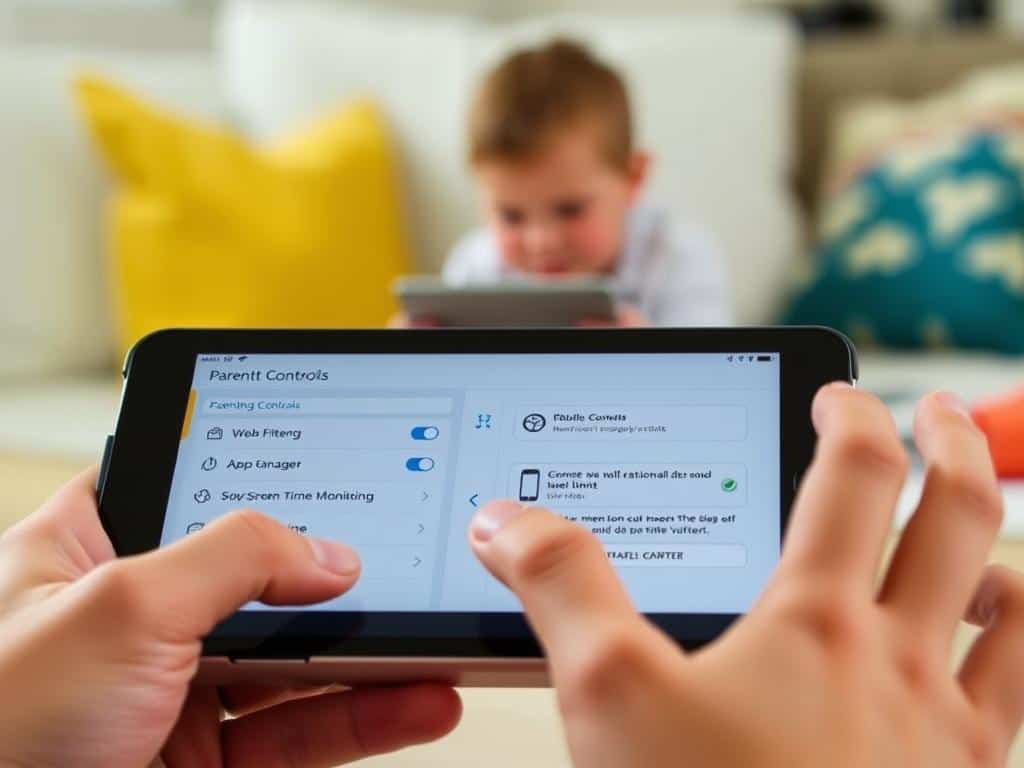
Understanding the Digital Landscape: Risks and Opportunities
Jonathan Haidt’s book “The Anxious Generation” shows how tech affects young people. It’s vital for parents to be proactive. Events like “Screen Smart” by Meta and Instagram show how the tech world is trying to help parents.
I teach my kids to balance screen time with other activities. This helps them understand privacy and dangers online. It’s important for them to know about online predators and bad content.
The Phone-Free Schools Movement shows schools are also focusing on less screen time. I want my kids to learn how to check information and use the internet wisely.
The Psychological Impact of Screen Time on Children
Screen time among children has skyrocketed, raising big questions about its effects on their minds. Kids start using screens at just four months old, instead of four years. This change is concerning for their mental health.
Research shows a link between too much screen time and anxiety and depression. It also points to other cognitive challenges.
Understanding Anxiety and Depression Associated with Screens
Too much screen time is linked to more anxiety and depression in kids. Kids who spend over two hours a day on screens face a higher risk of behavioral problems. This can lead to emotional issues and a lower quality of life.
While some media may be educational, too much screen time hurts emotional understanding and mental strength.
The Impact of Screens on Attention and Learning
Screens also affect learning. Studies show a link between more screen time and less focus in kids. Kids who watch screens for over an hour a day do worse in class and math.
They also score lower on tests when they multitask with media. This shows screens can hurt learning and brain growth. As screens fill kids’ lives, their ability to focus on schoolwork suffers.
Conclusion
Looking at how screens change childhood, it’s clear we need good screen time solutions. Studies show that 75% of kids aged 0-8 have mobile devices at home. And, 42% of those under 2 use screens a lot. This shows we must balance screen use and face digital parenting challenges.
Screen time has both good and bad sides. It can teach skills and help kids connect, but it also risks cyberbullying and mental health problems. With 1 in 3 kids facing cyberbullying and 80% of parents worried about screen time, we must act. The American Academy of Pediatrics suggests limiting screen time, which we should follow.
To deal with digital life, setting screen time limits and teaching healthy habits is key. We should encourage offline activities, talk about online safety, and support face-to-face interactions. This way, we help our kids do well in both digital and real-life worlds. We prepare them for a future where knowing about technology and social skills are both important.

