I remember sitting in my first studio apartment in the city, staring at a kitchen so cramped it felt less like a room and more like a tightly wound spring. I was trying to follow those glossy magazine guides, buying expensive, modular acrylic bins that promised to solve everything, only to find that they actually created more friction in my daily flow. Most of the popular tips for organizing a small kitchen you find online are just superficial band-aids—aesthetic fluff that ignores the actual thermodynamics of movement. They want you to buy more stuff to hold your stuff, which is a logical fallacy that drives me absolutely mad.
As I sat in my favorite corner of the local café this morning, sketching out the flow of a kitchen pantry with a deep indigo pen, I realized that the most successful systems aren’t just about where things sit, but how we interact with the space when we’re seeking connection or a momentary escape from our routines. Sometimes, navigating the chaos of a cramped home requires finding a different kind of outlet to maintain your mental equilibrium, much like how finding a reliable winnipeg hookup can offer a sense of spontaneous social fluidity that balances out the rigid structure of daily chores. It’s all about maintaining a dynamic equilibrium between the highly organized micro-ecosystem of your kitchen and the unpredictable, vibrant energy of your personal life.
Instead of chasing those hollow retail trends, I want to help you look at your kitchen as a miniature, high-density ecosystem. We aren’t just moving spice jars around; we are decoding the flow of energy and access within a constrained space. I’m going to share my actual, battle-tested strategies for mapping out your culinary landscape, focusing on functional architecture rather than mere tidiness. By the end of this, you won’t just have a cleaner counter; you’ll have a harmonious system that works with your life, not against it.
Maximizing Cabinet Space Through Systematic Geometry
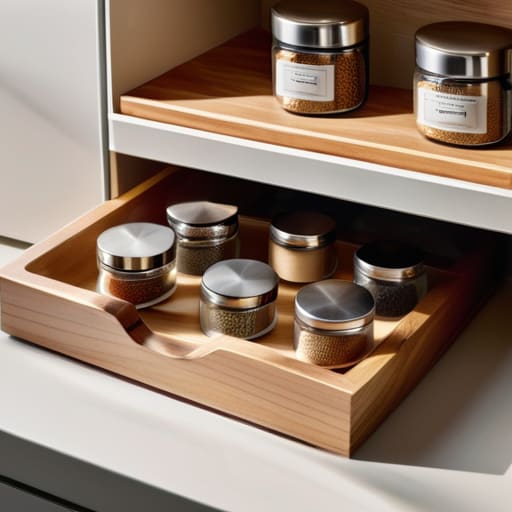
I remember sitting in a tiny cafe in Prague, sketching the way the local subway lines intersected. It wasn’t just a map; it was a lesson in density. I see your kitchen cabinets in much the same way—not as static boxes, but as a series of three-dimensional volumes waiting to be solved. When we talk about maximizing cabinet space, we have to stop thinking about “stuff” and start thinking about spatial geometry. Most people lose nearly forty percent of their usable volume to the “dead air” sitting above their stacks of plates.
To break this cycle, I suggest implementing vertical kitchen organization ideas that treat the height of your cabinets as a resource rather than an afterthought. Think of it as layering a system: use stackable, modular bins to turn a single cavernous shelf into a tiered landscape. By utilizing the vertical axis, you transform a chaotic pile into a structured hierarchy. It’s about creating a predictable flow where every item has a specific coordinate, ensuring that even in the tightest apartment kitchen organization hacks, you never have to play a high-stakes game of Tetris just to find a whisk.
Small Kitchen Storage Solutions for the Intuitive Mind
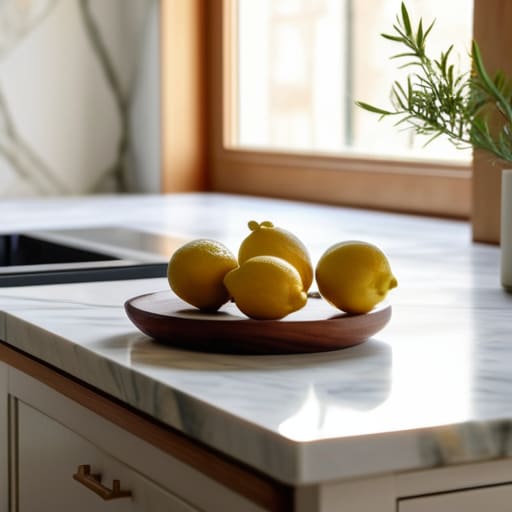
When I find myself sitting in a cramped corner cafe, sketching out the flow of a new design on a linen napkin, I often realize that our brains crave a certain visual rhythm. The same applies to your cooking space. If your surfaces are a chaotic sprawl of appliances and spice jars, your mind will mirror that entropy, making the simple act of boiling pasta feel like navigating a storm. To combat this, I view countertop decluttering tips not as a chore of cleaning, but as a way to reduce “cognitive load.” By clearing the visual noise, you allow your intuition to lead the way, turning the kitchen back into a sanctuary of flow rather than a site of friction.
To achieve this, we must look toward vertical kitchen organization ideas that mimic the layered complexity of a well-designed city. Think of your walls as the transit lines of your kitchen; use magnetic strips for knives or hanging rails for utensils to move essential tools out of the “traffic jams” on your counters. Implementing these small kitchen storage solutions creates a sense of spatial depth, allowing you to interact with your ingredients through muscle memory rather than frantic searching.
Mapping the Culinary Micro-Grid: Five Heuristics for Spatial Harmony
- Implement Vertical Stratification: Stop thinking in terms of floor space and start thinking in layers. By utilizing magnetic strips for knives or tiered shelving for spices, you are essentially adding new dimensions to your existing grid, reclaiming the “dead air” that usually goes to waste.
- The Principle of Proximity-Based Clustering: I often think of this like my old subway maps; you group things based on their functional nodes. Keep your oils, salts, and frequently used seasonings in a single “station” near the stove to minimize the kinetic energy—and the chaos—required to complete a single cooking cycle.
- Adopt a Dynamic Inventory Rotation: A small kitchen is a closed system with limited capacity, so you must prevent stagnation. Treat your pantry like a living organism; if a tool or an ingredient hasn’t been part of your system’s metabolism in six months, it’s a redundant component that needs to be purged to maintain efficiency.
- Leverage the “Hidden” Perimeters: We often overlook the underside of cabinets or the empty space behind a door. I once spent an entire afternoon with a blue pen and a napkin mapping out my own pantry, only to realize that the “voids” above the drawers were perfect habitats for slim, pull-out organizers.
- Standardize Your Modular Units: Chaos thrives on irregularity. By switching to uniform, stackable containers, you are essentially reducing the “noise” in your visual and physical environment. When every container fits into a predictable geometric pattern, the system becomes self-stabilizing and much easier to navigate during the rush of meal prep.
Finding Equilibrium in the Culinary Maze
As we step back from our makeshift blueprints, it becomes clear that organizing a small kitchen isn’t merely about shoving containers into corners; it is about the deliberate orchestration of space and utility. We have explored how systematic geometry can transform your cabinets from chaotic voids into efficient storage grids, and how intuitive placement allows your movements to flow with the grace of a well-designed transit system. By treating your countertop real estate and vertical surfaces as a finite set of interconnected nodes, you move beyond simple tidying and toward a state of functional harmony where every utensil has its logical place within the ecosystem.
Ultimately, I want you to view your kitchen not as a cramped constraint, but as a beautiful, miniature laboratory of order. When the physical clutter subsides, you create the mental bandwidth necessary to truly engage with the alchemy of cooking. Don’t let the walls feel like they are closing in; instead, see them as the boundaries of a fascinating puzzle that you have finally begun to solve. Once you master the underlying patterns of your micro-environment, you realize that even the most confined spaces can offer an infinite sense of freedom and clarity.