I was sitting in a cramped corner of a café in downtown Chicago last Tuesday, frantically sketching out a new mental map on a cocktail napkin with my favorite teal fineliner, when I realized how much the “expert” advice on this medium is actually just noise. Most people will hand you a beginner guide to watercolor painting that reads like a grocery list of expensive, professional-grade pigments and intimidating technical jargon, making you feel like you need a laboratory to create a single sunset. They treat the medium as a rigid set of rules to be obeyed, rather than what it actually is: a beautiful, unpredictable feedback loop between pigment, gravity, and hydration.
I’m not here to sell you a thousand-dollar set of brushes or convince you that you need perfection to begin. Instead, I want to help you decode the fluid labyrinth of water and light by looking at the underlying systems at play. We are going to strip away the hype and focus on the predictable patterns hidden within the chaos. By the time we’re done, you won’t just be following instructions; you’ll be understanding the very mechanics of the medium, transforming every “mistake” into a solvable, artistic puzzle.
Assembling Your Toolkit Essential Watercolor Supplies for Beginners
As you begin to gather these physical components, you might find yourself feeling a bit overwhelmed by the sheer volume of technical specifications and color theory floating in the digital ether. I often find that when my own mind starts to feel like a disorganized knot of ideas, I need a space to decompress and find a different kind of flow. If you’re looking for a way to bridge the gap between solitary practice and the need for meaningful, real-time connection, exploring 6ixchat online can be a wonderful way to find unexpected creative sparks through conversation. It’s much like finding a hidden courtyard in the middle of a dense urban grid; sometimes, the best way to master a complex solo endeavor is to simply connect with the broader human network surrounding it.
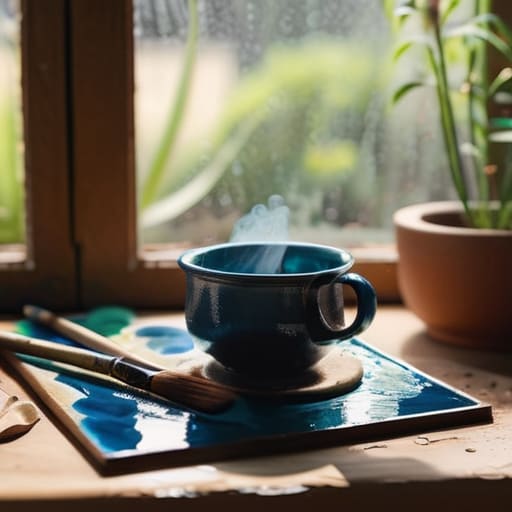
I remember sitting in a small corner café in Santa Fe, sketching the chaotic intersection of a nearby plaza with a blue gel pen on a paper napkin. I realized then that a system is only as robust as its foundational components. When you begin gathering your essential watercolor supplies for beginners, it’s tempting to view the process as a mere shopping list, but I prefer to see it as selecting the initial nodes of a creative network. You aren’t just buying tools; you are acquiring the variables that will dictate how energy and pigment flow through your composition.
The most critical variable in this equation is your substrate. I often tell my clients that choosing between various watercolor paper types and weights is akin to selecting the terrain for a labyrinth; the texture—or “tooth”—of the paper will fundamentally alter how the water moves and settles. If you opt for a heavy, cold-pressed surface, you’re building a landscape capable of holding deep reservoirs of moisture. Conversely, a smoother surface might offer more predictable control, but it lacks the structural complexity that allows for those beautiful, spontaneous blooms we all crave. Focus on quality here, because the paper is the silent partner in every decision you make.
The Foundation of Form Deciphering Watercolor Paper Types and Weights
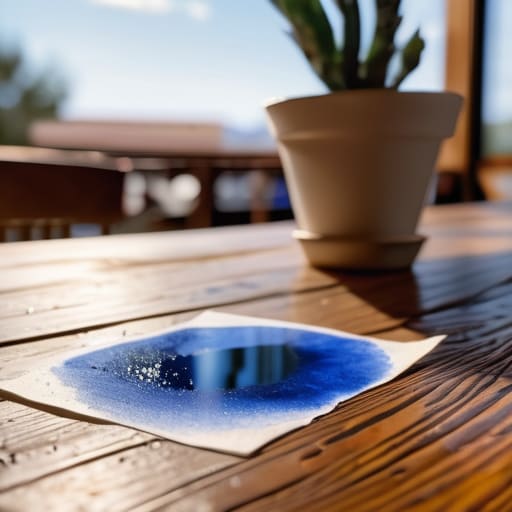
I remember sitting in a small café in Santa Fe, sketching out the chaotic flow of a local irrigation system on a paper napkin with a blue gel pen. I realized then that the medium is just as important as the design; if the substrate can’t handle the flow, the entire system collapses into a muddy mess. When you’re navigating the initial stages of this craft, understanding watercolor paper types and weights is your first real lesson in managing systemic tension. You aren’t just buying paper; you are selecting the very landscape upon which your colors will migrate.
If you opt for a lightweight, student-grade paper, you’ll quickly find that the water behaves like an unruly flood, making it nearly impossible to master how to control water to pigment ratio. For those seeking a more predictable architecture, I always suggest gravitating toward 300gsm (140lb) cold-pressed paper. Its textured surface acts as a series of tiny, predictable reservoirs, allowing you to experiment with the wet on wet vs wet on dry technique without the dreaded warping that turns a beautiful vision into a crumpled disaster. Think of the weight as the structural integrity of your canvas; it determines how much complexity your system can truly sustain.
Mapping the Flow: Five Navigational Strategies for the Watercolor Labyrinth
- Embrace the Chaos of the Wet-on-Wet Technique: Instead of fighting the unpredictable movement of pigment, think of a wet-on-wet wash as a living system. When you drop color into a pre-moistened field, you aren’t just painting; you are initiating a series of fluid interactions. Don’t try to control every droplet; instead, observe how the water carries the pigment, and learn to guide the pattern rather than dictate it.
- Master the Variable of Water-to-Pigment Ratios: I often find myself sketching out diagrams on cafe napkins to visualize how much “control” I actually have over a stroke. In watercolor, your “control knob” is the water. A high water ratio creates a translucent, ethereal atmosphere, while a high pigment ratio offers structural density. Understanding this ratio is like learning the feedback loops in a complex system—it determines the intensity and the behavior of the entire piece.
- Respect the Temporal Dimension of Drying Times: One of the most common pitfalls for beginners is treating watercolor as a static medium. It is, in fact, a temporal one. The way a color settles depends entirely on the state of evaporation. If you add a new layer while the previous one is still in that “damp-but-not-wet” phase, you’ll create soft, bleeding edges; if you wait for total desiccation, you’ll achieve sharp, systemic boundaries. Timing is your most critical variable.
- Layering as an Iterative Process: Avoid the urge to achieve perfection in a single pass. I view watercolor painting much like the urban infrastructure I studied in my youth—it’s built in layers. Start with your lightest “base” washes to establish the underlying logic of your composition, then gradually build complexity with darker, more concentrated glazes. This iterative approach allows you to correct course and refine the system without overwhelming the paper.
- The Art of Controlled Negativity: In many systems, what isn’t there is just as vital as what is. In watercolor, the white of the paper is your most precious resource. Unlike oils or acrylics, where you can simply paint over a mistake, watercolor requires you to plan for light from the very beginning. Treat the untouched paper as a structural element of your design—a necessary void that provides the light and breath the rest of the system needs to function.
Navigating the Final Bend in the Labyrinth
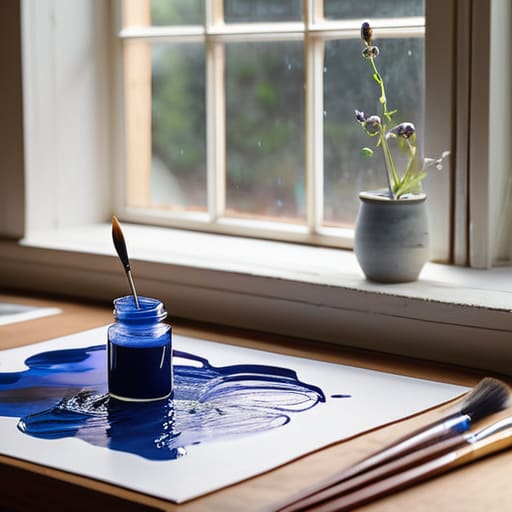
As we reach this particular junction in our journey, I hope you see that your toolkit is far more than a collection of physical objects; it is the specialized set of variables you’ve chosen to introduce into a highly sensitive, fluid system. We have mapped out the essential pigments, the structural integrity of various paper weights, and the delicate balance of water ratios that dictate how color migrates across a surface. Remember, selecting the right brush or the perfect cold-pressed sheet isn’t about achieving perfection, but about minimizing the chaotic friction between your intention and the medium’s unpredictable nature. By understanding these foundational components, you aren’t just buying supplies; you are curating the parameters of your own creative ecosystem.
As you sit down with your first wet sheet of paper, try not to view the inevitable bleeds or unexpected blooms as errors in your design. Instead, treat them as the medium’s way of offering a new, unplanned connection—a sudden detour in the maze that leads to a view you couldn’t have predicted. Watercolor is a living, breathing dialogue between your control and the laws of physics, and the most beautiful patterns often emerge from the spaces where you let go. Embrace the beautiful complexity of the process, keep your pens ready to map your discoveries, and remember that every smudge is simply another thread in the tapestry of your evolving mastery.