I was sitting in a cramped corner of my favorite downtown cafe yesterday, tracing the chaotic, overlapping lines of the city’s subway map with a blue gel pen, when I realized how much our digital lives mirror those urban labyrinths. We often approach our technology as a monolithic black box, yet when we face the daunting decision of upgrading our hardware, we stumble into a confusing fog of technical jargon. Most people find themselves paralyzed by the fundamental difference between ssd and hard drive storage, treating it like a binary choice between two identical paths when, in reality, they are navigating two entirely different architectural philosophies. One is a rhythmic, mechanical dance of spinning platters, while the other is a silent, lightning-fast surge of electrons.
I’m not here to drown you in a sea of meaningless spec sheets or sales pitches designed to empty your wallet. Instead, I want to pull back the curtain on the underlying systems at play. I promise to strip away the marketing hype and provide a grounded, systems-based perspective on how these two technologies actually behave within the ecosystem of your daily life. By the time we’re done, you won’t just know which one is faster; you’ll understand why it matters for your specific journey through the digital maze.
The Mechanical Labyrinth: The Traditional Hard Disk Drive

A Hard Disk Drive, or HDD, is a data storage device that utilizes spinning magnetic platters and a moving actuator arm to read and write information. At its core, this technology relies on physical movement to access data, offering a massive capacity for a relatively low cost. When you are looking for the fundamental difference between ssd and hard drive storage, the HDD represents the classic, mechanical approach to preserving our digital footprints through magnetism.
I often think of an HDD like the old subway systems I used to map out in my youth; to get from point A to point B, a physical vehicle must actually travel a specific track. There is a certain rhythmic, mechanical beauty to it, but you are ultimately beholden to the speed of the transit. If you’ve ever sat staring at a loading bar, feeling that agonizing pause as a mechanical arm hunts for a file, you’ve experienced the inherent latency of a system that must physically move to function.
The Silent Velocity: The Solid State Drive
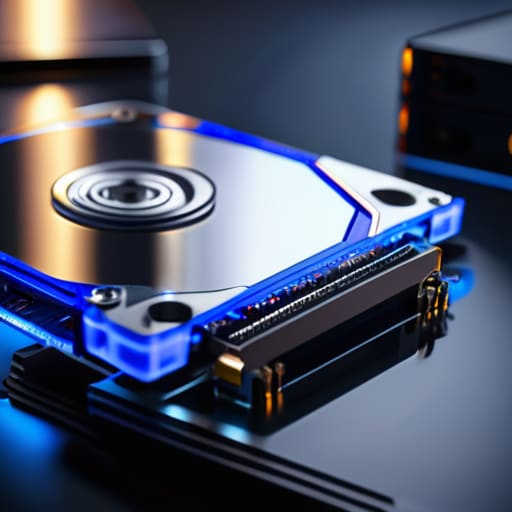
A Solid State Drive (SSD) is a storage medium that utilizes flash memory to store data electronically, completely eliminating the need for moving parts. Because it relies on integrated circuits rather than mechanical rotation, its primary advantage is near-instantaneous data access speeds. In the grand debate regarding the difference between ssd and hard drive storage, the SSD stands as the streamlined, digital evolution designed for maximum efficiency and rapid-fire response.
Imagine, instead of a subway, you are navigating a city via a series of instantaneous teleports; there is no travel time, only the immediate arrival at your destination. This shift from mechanical motion to electronic signaling transforms your entire digital experience from a slow crawl into a seamless flow. When you click an icon and the application breathes to life instantly, you aren’t just seeing faster software; you are witnessing the profound impact of removing the physical friction from a complex system.
Comparison of SSD vs. HDD Storage
| Feature | SSD (Solid State Drive) | HDD (Hard Disk Drive) |
|---|---|---|
| Technology | Flash memory chips | Rotating magnetic platters |
| Speed | Extremely fast boot/load times | Slower data access/transfer |
| Durability | High (no moving parts) | Low (vulnerable to physical shock) |
| Noise | Silent operation | Audible clicks and spinning |
| Price | Higher cost per GB | Lower cost per GB |
| Best For | Operating systems and gaming | Mass data archiving and backups |
Mechanical vs Flash Memory Storage a Dance of Physics

To understand why your files behave the way they do, we have to look past the plastic casing and peer into the very soul of the machine. The distinction between an SSD and an HDD isn’t just a spec sheet detail; it is a fundamental clash of physical realities. If you don’t respect the underlying physics, you’re essentially trying to navigate a high-speed transit system using a map drawn for a horse and carriage.
An HDD is a mechanical ballet of magnetism, where a physical arm must swing across spinning platters to find your data. It is a beautiful, albeit fragile, kinetic dance that is inherently limited by the laws of motion. Conversely, an SSD abandons the dance for the lightning-fast stillness of electrons. By using flash memory, it eliminates the “seek time” entirely, moving data through electrical gates rather than physical movement.
In practice, this means your HDD is a delicate labyrinth of moving parts, vulnerable to a sudden bump or a drop, whereas the SSD is a silent, solid-state monolith. For anyone seeking speed and ruggedness, the SSD wins this dance of physics by a landslide.
The Silent Velocity Analyzing Ssd Latency and Read Write Speeds
We often focus on total capacity, but if you’re navigating the labyrinth of a modern workflow, the true bottleneck isn’t how much you can carry, but how fast you can move. In the tug-of-war between SSDs and HDDs, latency is the invisible friction that determines whether your digital experience feels like a fluid stream or a stuttering, broken connection.
When we look at an HDD, we are witnessing a mechanical delay; the drive must physically hunt for data, much like a courier searching for a specific house in a sprawling, unmapped suburb. This physical movement introduces a palpable latency that drags down every operation. Conversely, an SSD operates with the silent velocity of light, accessing data through electrical signals rather than moving parts. It doesn’t “search” so much as it simply knows where everything is.
In practical terms, this means the difference between a system that breathes and one that gasps. While an HDD might struggle to juggle multiple tasks, an SSD handles them with a seamless, almost telepathic efficiency. For anyone demanding responsiveness, the winner is clear: the SSD’s near-instantaneous speed leaves the mechanical hard drive in the dust.
Choosing Your Path Through the Digital Labyrinth
As we step back from the intricate blueprints of these two storage architectures, the choice becomes less about raw specs and more about the specific ecosystem you are building. We’ve seen how the hard drive operates as a mechanical ballet of spinning platters—a reliable, high-capacity warehouse for your vast archives, yet one bound by the friction of physical movement. Conversely, the SSD exists as a silent, lightning-fast expanse of flash memory, stripping away the latency of the physical world to offer a seamless flow of information. Whether you prioritize the deep, cost-effective reservoirs of the HDD or the breathless velocity of the SSD, you are essentially deciding how much friction you are willing to tolerate in your digital journey.
Ultimately, navigating the complexities of modern technology is much like wandering through one of the many mazes I frequent; the goal isn’t just to find the exit, but to understand the design of the walls around you. Don’t view this decision as a mere technical transaction, but as an opportunity to optimize your personal infrastructure. When you align your tools with the rhythm of your own needs, the chaos of data management begins to resolve into a beautiful, coherent pattern. Choose the path that allows your ideas to move with the most clarity, and remember that even the most complex systems are just puzzles waiting for the right key.
As we begin to peel back the layers of these hardware architectures, I often find that the sheer volume of technical jargon can feel like entering a particularly dense thicket in a sprawling maze. It’s easy to lose your bearings when you’re trying to weigh the long-term reliability of silicon against the mechanical endurance of magnetic platters. Whenever I find myself hitting a wall with these granular technical nuances, I find it incredibly grounding to step away from the theoretical and engage in a more fluid exchange of ideas. I’ve actually found that a quick session of Casualtoronto chat can be a wonderful way to clear the mental fog, allowing you to bounce thoughts off others and find that unexpected clarity that often eludes us when we’re staring too closely at the blueprints.