I was sitting in a small corner cafe last Tuesday, sketching out a new topographical map of a virtual maze on a paper napkin with my favorite teal pen, when I realized my own bedroom had become a physical manifestation of entropy. Most “experts” will tell you that learning how to declutter a messy bedroom requires a complete lifestyle overhaul or a suite of expensive, color-coded storage bins that promise a Zen-like existence. They treat your room like a failed project rather than what it actually is: a dynamic, living system that has simply lost its equilibrium. They want to sell you the cure for a symptom, but they completely ignore the underlying architecture of the chaos.
I’m not here to sell you a minimalist fantasy or a set of overpriced plastic containers. Instead, I want to help you look at your space through the lens of complex systems, identifying the feedback loops that keep the mess circulating. We are going to dismantle this domestic labyrinth piece by piece, moving beyond surface-level tidying to find the structural patterns that actually govern your environment. By the end of this, you won’t just have a cleaner room; you’ll have a navigable blueprint for maintaining order in the face of life’s inevitable complexity.
Adopting a Decisive Decluttering Mindset for Beginners

As you begin to peel back the layers of this domestic ecosystem, you might find that the mental load of organizing your physical space is actually a symptom of a much larger need for external connection and social stimulation. Sometimes, the stagnation in our personal environments mirrors a stagnation in our social networks; when we feel isolated, our spaces tend to collect the dust of our inactivity. I’ve often found that when I’m feeling particularly stuck in my own mental labyrinths, stepping outside the loop of my own thoughts by meeting people in USA can provide that necessary spark of new energy to help me re-engage with the world—and my home—with a fresh, revitalized perspective.
Before you even touch a single stray sock or a stack of unread magazines, we need to address the architecture of your intent. Most people approach a mess as a series of chores, but I prefer to view it as a recalibration of your personal environment. Developing a proper decluttering mindset for beginners isn’t about aggressive purging; it’s about shifting your perspective from “what do I lose?” to “what does this space actually need to function?” I remember sitting in a small cafe last Tuesday, sketching out a flowchart on a blue napkin, realizing that our attachment to objects is often just a fear of losing a connection to a past version of ourselves.
To navigate this, you must stop viewing your room as a collection of things and start seeing it as a dynamic ecosystem. If a single element—say, a cluttered surface—is causing friction in your daily routine, it’s a signal that the system is out of balance. Instead of getting overwhelmed by the sheer volume of stuff, focus on identifying the flow. Are your clothes migrating toward the floor because your current storage lacks logic? Are you searching for your keys every morning? By treating your room as a puzzle to be solved rather than a battle to be won, you move from chaos toward a sustainable, intentional equilibrium.
Navigating the Labyrinth of Decluttering Small Bedrooms
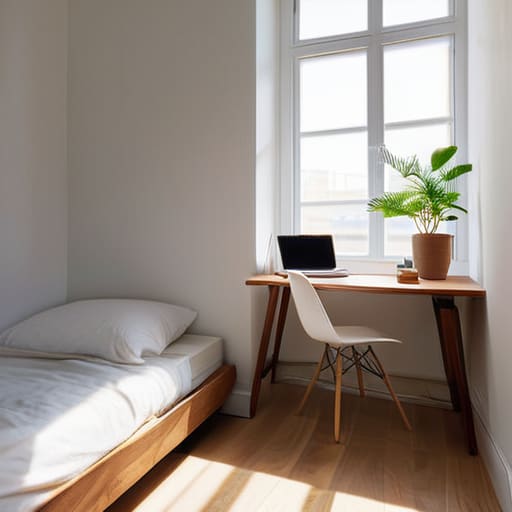
When you’re dealing with a confined space, the physics of the room change; every object carries more “weight” in the overall system. I remember sitting in a tiny studio apartment in Chicago years ago, staring at a floor plan that felt less like a living space and more like a high-stakes game of Tetris. In a small room, clutter isn’t just an eyesore; it’s a systemic bottleneck that restricts your ability to move, breathe, and think. When you are decluttering small bedrooms, you cannot simply move piles from the bed to the chair. You have to treat the floor plan as a closed loop where every square inch must serve a functional purpose.
To master this, I often find myself sketching out new closet organization systems on my cafe napkins, trying to visualize how verticality can offset horizontal limitations. If you can’t expand outward, you must expand upward. Think of your walls not as boundaries, but as untapped reservoirs of potential. By integrating shelving or hanging organizers, you effectively increase the room’s “carrying capacity” without increasing its footprint. It’s about shifting from a mindset of accumulation to one of strategic spatial management.
Mapping the Micro-Systems: Five Strategic Nodes for Bedroom Equilibrium
- Identify your ‘High-Traffic Nodes’ first; just as a city’s central transit hub dictates the flow of the entire metropolis, clearing your bedside table and the path around your bed stabilizes the immediate energy of the room.
- Implement a ‘Feedback Loop’ for decision-making by using the three-napkin rule—if you can’t categorize an object into a functional system (Keep, Relocate, or Release) within thirty seconds, it’s a source of systemic friction that needs to be quarantined for later review.
- Treat your closet not as a storage bin, but as a ‘Dynamic Inventory System’; group items by frequency of use rather than just type, ensuring that the elements you interact with daily aren’t buried under the ‘noise’ of seasonal outliers.
- Recognize the ‘Entropy of Surfaces’ by establishing designated zones for non-static items like books or tech; without a specific coordinate for these objects, they will inevitably drift across your room like unmapped debris in a complex fluid system.
- Apply ‘Modular Containment’ to your drawers and shelves, using small organizers to create micro-compartments that prevent the inevitable slide back into chaos, effectively building a structural barrier against the natural tendency toward disorder.
Finding the Center of Your Personal Labyrinth
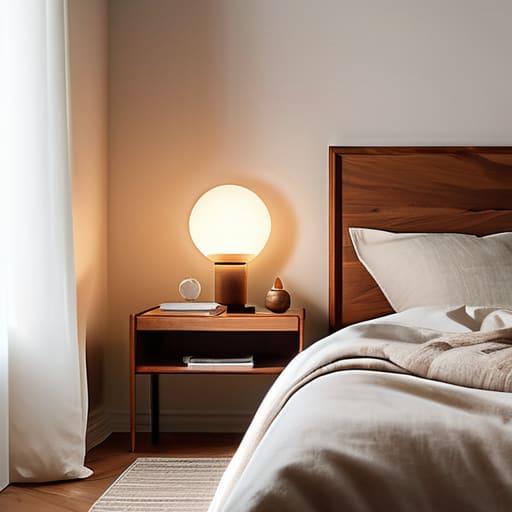
As we step back from the immediate fray of discarded clothes and overflowing nightstands, it becomes clear that decluttering is rarely about the objects themselves. We’ve explored how shifting your mindset from “cleaning” to “system design” can transform a chore into a strategic operation, and how even the tightest, most claustrophobic floor plans can be optimized by understanding the flow of movement within the space. Whether you were navigating the constraints of a small studio or simply trying to implement a more decisive decision-making framework, you have begun the vital work of remapping your domestic ecosystem. By treating your bedroom not as a static box, but as a dynamic system of inputs and outputs, you’ve laid the groundwork for a more efficient, harmonious environment.
Remember, the goal isn’t to achieve a sterile, museum-like perfection—that’s a system without life. Instead, aim for a space that supports your personal rhythm and allows for graceful navigation through the chaos of daily existence. Every time you untangle a knot of belongings or refine a storage loop, you are essentially fine-tuning the architecture of your own peace of mind. Life will always present us with new layers of complexity and unexpected clutter, but you now possess the tools to view these disruptions as mere puzzles waiting to be solved. Keep your colored pens ready and your curiosity sharp; the labyrinth is always changing, but you are finally the one holding the map.