Did you know that fewer than 5% of U.S. adults are vegetarian, and only 1% are vegan? This low number might make you wonder why vegan diets are so popular. As we look into plant-based eating, it’s important to consider both the good and bad sides of veganism.
Many people say veganism is great for your health, improving digestion and lowering cholesterol. It can also lower the risk of chronic diseases. But, they often don’t talk about the possible nutrition gaps in a vegan diet. I want to give you a full view of veganism’s health effects, balancing the good and the bad.
Let’s dive into the reasons why veganism is becoming more popular and its possible downsides.
Key Takeaways
- Only 1% of U.S. adults identify as vegan, indicating a niche yet growing trend.
- Plant-based diets may lower cholesterol and improve heart health.
- A well-rounded vegan diet is essential to prevent possible nutrient deficiencies.
- Vitamin B12 deficiency is common among vegans but rare in omnivores.
- Careful planning is necessary to ensure children receive critical nutrients in a vegan diet.
Overview of Vegan Diet and Its Popularity
The vegan diet has become more popular, mainly among the young in the United States. This rise shows a big change towards living a plant-based life. People are choosing this way of eating for health, environmental, and animal welfare reasons.
The Growth of Veganism
More and more people, like millennials and Gen Z, are turning to veganism. This change shows a big shift in what they value, like health and the planet. Social media and influencers play a big role in spreading the idea of a plant-based lifestyle.
Veganism vs. Other Dietary Lifestyles
Veganism is different from vegetarianism. Vegans don’t eat anything from animals, while vegetarians might eat dairy and eggs. Studies show that vegans can have unique health benefits and challenges, depending on their diet and overall health.
Health Benefits Associated with Veganism
Studies show that veganism can help prevent chronic diseases like diabetes, high blood pressure, and heart disease. Vegans might have better blood sugar control and lower cholesterol. They also tend to have a 15% lower risk of some cancers.
They eat more fiber, which helps with weight and digestion. This improves their gut health.
Vegan Diet Risks: Nutrition Deficiencies to Consider
The vegan diet trend has sparked health discussions. Many choose it for ethical or environmental reasons. But, it’s important to know about nutrition deficiencies.
Essential Nutrients at Risk
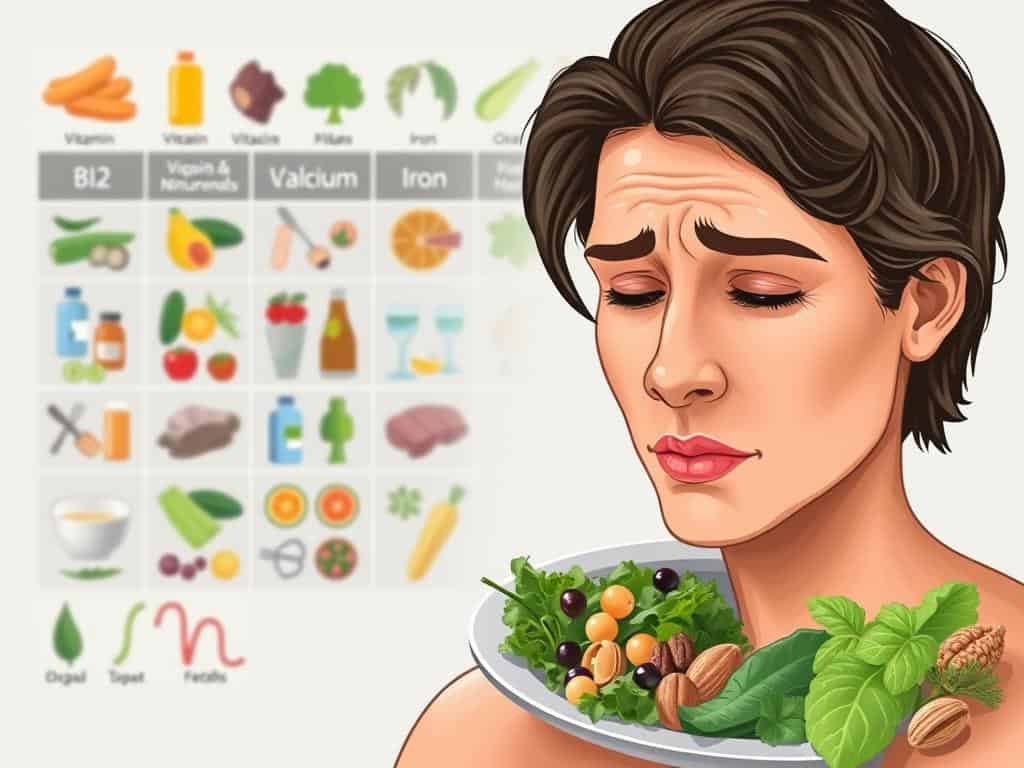
A well-planned vegan diet is healthy, but key nutrients are a concern. Vitamin B12 is a big risk, as it comes mainly from animals. Many vegans face a B12 deficiency, affecting nerve health and blood.
Other nutrients like omega-3, calcium, zinc, iron, and high-quality protein are also at risk. Deficiencies can cause hair loss, weak bones, anemia, and skin rashes.
Potential Health Consequences
Nutrient deficiencies in vegan diets can lead to serious health issues. Studies link them to anxiety, depression, and cancer. Bone fractures and iron deficiency can cause fatigue and weakness.
Pregnant or breastfeeding vegans need to watch their nutrition closely. Inadequate nutrients can harm child development.
Need for Balanced Vegan Diet
A balanced vegan diet is key to avoiding these risks. Eating a variety of fruits, vegetables, whole grains, and fortified foods helps. Vegans should aim for five portions of fruits and vegetables daily and drink six to eight cups of fluids.
Supplements for B12 and omega-3 may be needed for optimal health. Diversifying your diet improves nutrient intake and overall wellbeing.
Conclusion
Exploring a vegan diet shows a mix of health benefits and risks. About 3% of Americans are vegan now. This rise is mainly because of the diet’s link to lower disease risks.
Studies show a vegan diet can cut type 2 diabetes risk by 23%. It also lowers prostate cancer risk in men by 35% compared to meat eaters.
But, my look into veganism shows it can lead to nutritional gaps if not planned right. Nutrients like protein, vitamin B12, omega-3s, and calcium are at risk. This is true for kids, pregnant women, and those breastfeeding.
It’s key for vegans to check their nutrition and talk to doctors. This ensures their diet meets their needs.
In the end, a vegan diet can be good for health if done right. It helps with weight and heart health. But, it’s important to avoid unbalanced eating.
By choosing healthy foods and knowing your dietary needs, you can manage veganism well. A vegan lifestyle can boost health if you stay informed and careful.

