Did you know over 90% of borrowers can get a tax break on their student loans? This can lower your taxable income and your taxes. If you’re dealing with student debt, knowing about tax breaks is key. I’ll look into if student loans are tax deductible, focusing on interest paid and its financial impact.
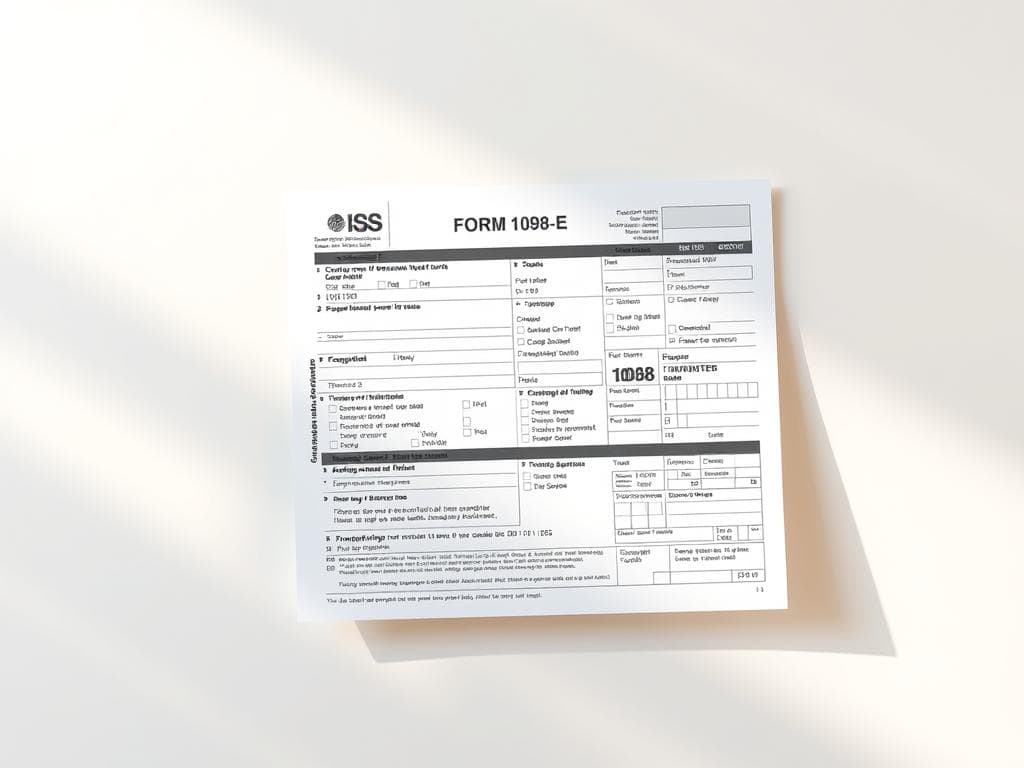
The IRS sends Form 1098-E for interest over $600. It’s important for borrowers to know if they qualify and how much they can save.
I’ll explain what makes you eligible for deductions and how much you can deduct. Knowing this can help reduce your tax burden from student loans.
Key Takeaways
- Over 90% of borrowers can take advantage of student loan interest deductions to lower their taxes.
- IRS Form 1098-E reports interest payments of $600 or more paid within the tax year.
- Understanding how student loan tax breaks can affect my overall financial impact is vital.
- Taxpayers may typically deduct up to $2,500 of interest on eligible student loans.
- Income limits apply, affecting the amount that can be deducted from taxable income.
Understanding Student Loan Interest Tax Deductions
Student loan interest tax deductions can greatly reduce your taxes. It’s key to know who can get it and how much. This deduction is for qualified student loans used for education costs. Knowing about Modified Adjusted Gross Income (MAGI) helps you get the most from this benefit.
Eligibility Criteria for Deduction
To get the interest deduction, you must meet certain rules. You must have paid at least $600 in interest. If you’re single and your MAGI is under $75,000, you can deduct up to $2,500.
For married couples filing together, the limit is $150,000. If your MAGI is between $75,000 and $90,000 (or $150,000 and $180,000 for couples), the deduction decreases. If your MAGI is over $95,000 for singles or $195,000 for couples, you can’t get the deduction.
How Much Can You Deduct?
You can deduct up to $2,500 of interest on qualified student loans for the year. This deduction lowers your income, even if you don’t itemize. Keep track of your interest payments, as you’ll get a Form 1098-E if you pay over $600.
Student Loan Tax Breaks Explained
Understanding the student loan interest deduction is key for those with academic debt. This deduction can offer tax benefits that help reduce financial stress each year. To benefit, knowing the reporting needs for the IRS is essential.
Reporting Requirements on IRS Form 1098-E
If I pay over $600 in interest on my student loans to a federal servicer in a year, I get an IRS Form 1098-E. This form shows how much interest I paid, helping me report it on my taxes. It lets me claim a deduction that can lower my taxable income by up to $2,500.
Impact on Tax Liability
The student loan interest deduction lowers my taxable income directly. It doesn’t require itemizing. If my income is under $80,000 as a single person or $165,000 for joint filers, I get the full deduction. As my income goes up, the deduction decreases.
For instance, single filers with incomes between $80,000 and $95,000 see a reduction in the deduction. Knowing these income limits helps me understand my tax liability better. This way, I can maximize the deductions available to me.
Education Tax Credits: Other Benefits
There are two main education tax credits: the American Opportunity Tax Credit and the Lifetime Learning Credit. Both help students and their families by reducing the cost of higher education. Knowing about these credits can save you a lot on your taxes.
American Opportunity Tax Credit
The American Opportunity Tax Credit (AOTC) gives up to $2,500 for students in their first four years of college. It covers things like tuition, fees, and books. Plus, it’s partially refundable, so you can get up to $1,000 back even if you owe no taxes.
To get this credit, your income must be under $80,000 if you’re single, or $160,000 if you’re married. This makes college more affordable for many families.
Lifetime Learning Credit
The Lifetime Learning Credit (LLC) offers up to $2,000 per tax return. It’s for any number of students in eligible college courses. It’s great for those taking courses to improve job skills.
The LLC starts to phase out when your income goes over $59,000 if you’re single, or $118,000 if you’re married. It’s a good chance for people to keep learning and growing in their careers.
Conclusion
Understanding student loans and tax deductions is key when tax season comes. Being able to deduct up to $2,500 in student loan interest is very important. It not only reduces my taxable income but also saves me a lot of money.
If my Modified Adjusted Gross Income is below certain levels, this deduction can be a big help. It’s a great way to save, making my financial situation better.
Also, combining this deduction with other education tax credits can boost my finances even more. Knowing about these benefits helps me plan better for tax time. This way, I can make the most of the savings available to me.
It’s important to stay up-to-date with financial changes and tax rules. This knowledge helps me manage my student loans better. It also lets me take full advantage of tax deductions, leading to better financial health.

