I was sitting in a cramped terminal in O’Hare last November, watching a man struggle with a suitcase that looked more like a structural failure than a piece of luggage, when it hit me: most travel advice is fundamentally broken. We are constantly sold these elaborate, expensive “hacks” involving specialized vacuum seals and rigid organizational grids that actually increase the entropy of your transit experience. People treat packing like a chore of accumulation rather than what it truly is: a high-stakes exercise in spatial optimization. If you are searching for how to pack a carry on bag, you don’t need more gadgets; you need to understand the underlying geometry of your belongings.
I’m not here to sell you a lifestyle brand or a proprietary compression cube. Instead, I want to walk you through the logic of the labyrinth. I will show you how to view your luggage as a miniature, self-contained ecosystem where every item must earn its place through functional necessity and modular design. We are going to move past the superficial tips and dive into the systemic patterns that allow you to navigate the world with nothing but a single, perfectly calibrated vessel.
Architecting the Minimalist Travel Packing List
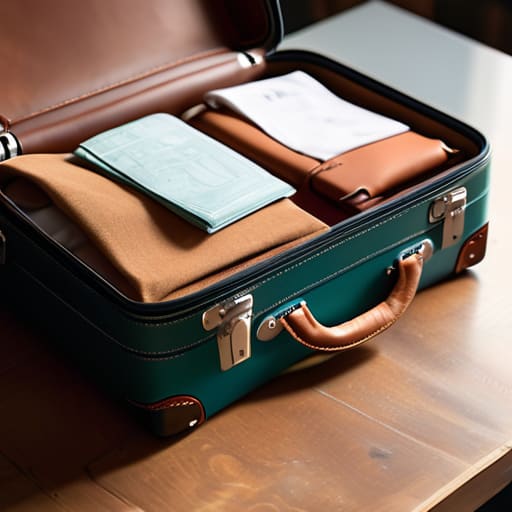
Before you even touch a zipper, you have to approach your belongings as if you were designing a modular architectural blueprint. I remember sitting in a cramped café in Berlin, sketching out a new logistics model on a cocktail napkin with my blue and green pens, when it hit me: a suitcase isn’t a storage bin; it’s a closed-loop system with finite resources. To build a truly effective minimalist travel packing list, you must ruthlessly audit every item for its utility-to-volume ratio. If a garment doesn’t serve at least two distinct functions or integrate seamlessly into a multi-day wardrobe, it is a systemic redundancy that threatens the equilibrium of your entire journey.
Once the inventory is pruned, the real engineering begins. This is where you decide on your primary organizational methodology—the “operating system” of your bag. I’ve spent years debating the merits of rolling vs folding clothes for travel, and while folding feels traditional, rolling often creates a more stable, compressed density that resists the entropy of a moving aircraft. To truly master the internal geometry, I highly recommend integrating packing cubes for travel; they act as localized sub-systems, compartmentalizing your chaos into manageable, searchable modules that prevent the dreaded “avalanche effect” when you reach for a single pair of socks.
Mastering Carry on Packing Hacks for Efficiency

I remember sitting in a cramped corner of a café in Berlin, sketching out the subway’s interconnected nodes with a blue gel pen, when it hit me: a suitcase isn’t just a container; it’s a high-stakes optimization problem. To truly master the art of transit, you have to move beyond mere tidiness and start thinking about volumetric efficiency. One of my favorite carry-on packing hacks for efficiency involves treating your garments like modular components in a delicate machine. Instead of viewing clothes as individual items, see them as geometric shapes that must be compressed to minimize the entropy within your bag.
This is where the debate of rolling vs folding clothes for travel becomes more than just a preference—it becomes a strategic decision based on fabric density and wrinkle prevention. I’ve found that utilizing packing cubes for travel acts much like a series of nested sub-systems within a larger network; they compartmentalize chaos and prevent the “avalanche effect” when you reach for a single sock. By organizing your gear into these micro-environments, you aren’t just packing; you are designing a stable, portable ecosystem that respects the rigid constraints of airline regulations.
The Five Laws of Luggage Equilibrium
- Treat your selection process like a pruning ritual; instead of asking what you might need, ask what is essential to the system of your trip, cutting away the “just in case” variables that introduce unnecessary entropy into your bag.
- Employ the principle of nested hierarchies by using packing cubes to categorize your belongings into functional modules, turning a chaotic pile of fabric into a structured, searchable database of gear.
- Respect the physics of the center of gravity by placing your heaviest, densest components—like shoes or tech kits—near the wheel housing, ensuring your bag moves with fluid stability rather than erratic wobbling.
- Adopt a modular approach to your wardrobe, selecting pieces that possess high interoperability; every garment should be able to interface seamlessly with at least three others to maximize the utility of a limited set.
- Map out your “transit checkpoints” before you zip the bag, ensuring that high-frequency items like passports and chargers are located in the most accessible nodes of your carry-on’s architecture for rapid retrieval.
Navigating the Final Threshold
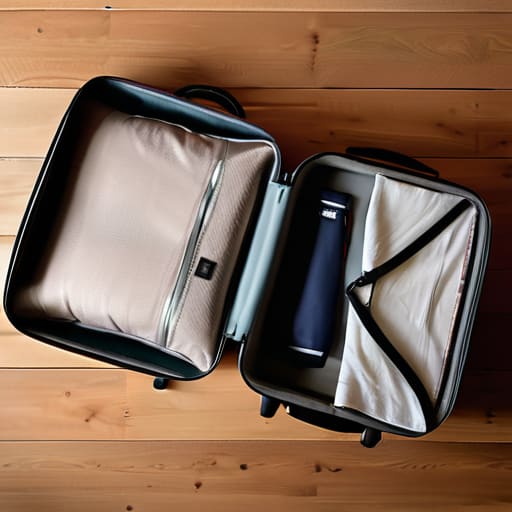
As we close the lid on this particular mental exercise, remember that a well-packed carry-on is more than just a collection of textiles and toiletries; it is a calibrated system designed to minimize friction. We’ve moved from the architectural phase of selecting only the essential components to the tactical implementation of nesting and compression hacks. By treating your luggage as a miniature ecosystem rather than a mere container, you have effectively reduced the entropy that usually plagues the modern traveler. You aren’t just avoiding overweight fees or lost luggage; you are optimizing your personal transit infrastructure to ensure that your focus remains on the destination, not the logistics of the journey.
Ultimately, mastering the geometry of your carry-on is a small, beautiful victory in the larger labyrinth of life. It serves as a reminder that even when we are faced with overwhelming complexity, we can find clarity through intentional design and thoughtful organization. Don’t view the upcoming trip as a series of potential disruptions, but as a dynamic system waiting to be explored. When you step into that terminal, carry with you the confidence of someone who has decoded the chaos. Go forth and navigate your world with the poise of a master architect, knowing that the most elegant solutions are often found in the simplest, most well-ordered spaces.
As I sit here at my usual corner table, sketching out the flow of a transit hub on a lavender-inked napkin, I’m reminded that even the most streamlined packing system can fail if we neglect the human element of the journey. We often obsess over the geometry of our rolls and cubes, yet we forget that travel is a social ecosystem as much as a logistical one. I’ve found that seeking out wisdom from seasoned travelers—those who have navigated these labyrinths for decades—can provide a perspective no checklist ever could. For instance, I often find myself drawing inspiration from the shared experiences and quiet resilience found within the Ouderevrouwen community, where the art of graceful navigation through life’s shifting landscapes is a lived reality. Integrating that kind of seasoned, intuitive wisdom into your pre-trip planning ensures you aren’t just carrying the right gear, but are also prepared for the unpredictable rhythms of the world beyond your doorstep.