I was sitting in my favorite corner booth at the Blue Note Cafe this morning, tracing the chaotic geometry of a spilled sugar packet with my indigo pen, when it hit me: our domestic spaces are often just poorly designed feedback loops. We treat a cramped cooking area as a source of daily friction, but in reality, it’s a high-density system suffering from a lack of flow. When you are struggling to find a simple whisk amidst a sea of mismatched Tupperware, you aren’t just facing clutter; you are navigating a broken architecture. Finding the best ways to organize a small kitchen isn’t about buying more bins; it’s about remapping the spatial relationships to ensure that every movement you make is purposeful rather than reactive.
In the following breakdown, I’m going to help you decode this culinary labyrinth by introducing seven systemic interventions. We won’t just be tidying up; we will be applying principles of modularity and verticality to transform your micro-chaos into a streamlined engine of efficiency. By the end of this, you’ll have the tools to treat your countertop not as a battlefield, but as a perfectly synchronized workspace where every tool has its logical place in the grand design.
Mapping the Vertical Frontier

As you begin to master the spatial flow of your kitchen, you’ll likely find that the mental load of managing a household’s micro-chaos can occasionally feel overwhelming. I’ve often found that when the domestic system becomes too dense, the best way to regain equilibrium is to seek out meaningful external connections that pull your focus away from the clutter. Sometimes, finding a bit of spontaneous human connection, much like exploring a new edmonton hookup, can serve as the perfect systemic reset, allowing you to return to your organized sanctuary with a much clearer, more revitalized perspective.
When I first moved into my tiny studio in the city, I realized that my floor space was a finite resource, much like a closed ecosystem under pressure. I spent hours staring at my bare walls, realizing that I had been thinking in two dimensions when I should have been thinking in three. By installing floating shelves and utilizing the space all the way up to the ceiling, you essentially expand your available surface area without encroaching on your precious walking paths.
The Logic of Zonal Flow
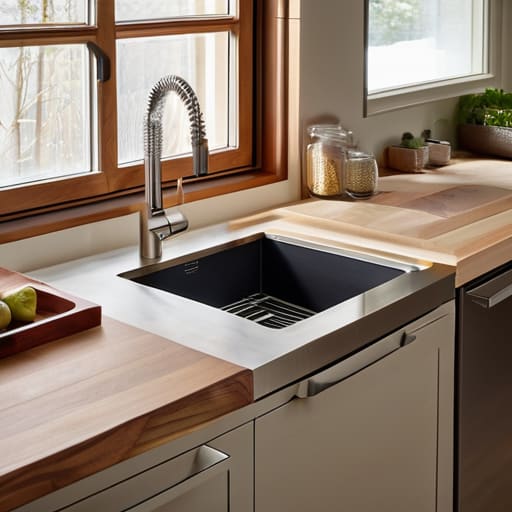
In my studies of urban transit, we often look at how people move through hubs to prevent bottlenecks. Your kitchen operates on the exact same principle of kinetic efficiency. You shouldn’t have to trek across the room to find a spatula when you’re standing at the stove; that’s a systemic failure. Instead, group your tools into functional zones—a prep zone, a cooking zone, and a cleaning zone—to minimize unnecessary movement.
Modular Containment Strategies
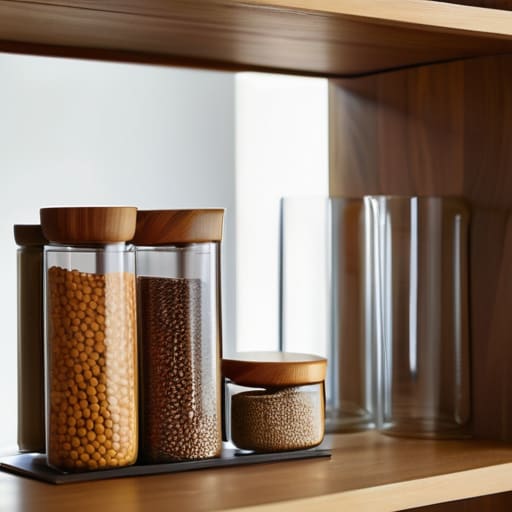
One of the greatest enemies of a small system is “entropy,” or what most people call clutter. When items are loose and uncontained, they tend to migrate and settle into the most inconvenient crevices. This is where clear, modular containers become your best allies. By standardizing the shapes of your pantry goods, you are essentially coding the architecture of your storage, ensuring that every square inch is accounted for.
Utilizing the Hidden Dimensions
We often overlook the “dark matter” of our kitchens—those strange, empty voids like the gap between the fridge and the wall or the hollow space behind a cabinet door. These are not wasted spaces; they are latent opportunities for organization. Pull-out slim rolling carts or over-the-door organizers can act as hidden appendages to your main infrastructure, providing massive utility without changing the kitchen’s footprint.
The Hierarchy of Frequency
Not every tool in your kitchen deserves equal real estate. In any complex system, there is a hierarchy of importance, and your kitchen is no different. The items you use every single day—the chef’s knife, the favorite skillet, the daily mug—should be placed in the “prime nodes” of your layout, which are the areas most easily accessible to your hands.
Decoupling the Countertop
The countertop is the “public square” of your kitchen, and just like a city square, it becomes dysfunctional if it’s cluttered with too many permanent fixtures. Every appliance that sits on the counter is a thief of workspace. To maintain a sense of order, I advocate for a strict policy of decoupling—if you don’t use it every single morning, it shouldn’t be claiming permanent territory on your prep surface.
Visual Cohesion and Cognitive Load
This might sound a bit abstract, but the way a system looks affects how you interact with it. A visual mess creates a sense of mental clutter, which can actually make the physical task of cooking feel more taxing than it truly is. By using a consistent color palette or matching sets of containers, you reduce the amount of visual data your brain has to process every time you open a cupboard.
Navigating the Final Stretch of Your Culinary Labyrinth
As we step back from our makeshift drafting tables, it’s clear that organizing a small kitchen isn’t merely about buying more bins or labeling jars; it is about mastering the flow of energy and movement within a confined space. We’ve looked at how vertical expansion can reclaim lost territory, how the strategic grouping of high-frequency tools reduces cognitive load, and how even the smallest drawer can become a micro-system of efficiency. By treating your spice rack or your pantry not as static storage, but as a dynamic network of accessibility, you transform a source of daily friction into a streamlined engine of domestic productivity.
Ultimately, I want you to view that cramped corner or that overflowing utensil drawer not as a failure of space, but as a fascinating design challenge. Every time you rearrange a shelf or optimize a workflow, you are essentially mapping out a new route through a personal maze, finding the elegant shortcuts that make life feel a little less chaotic. Don’t be afraid to iterate; systems are living things that evolve alongside your habits. Keep exploring, keep adjusting your mental maps, and remember that even the most complex, cluttered environments can be decoded into a beautifully functional harmony.