I was sitting in a cramped cafe in downtown Chicago last Tuesday, frantically sketching a new heat-transfer diagram on a cocktail napkin with my blue gel pen, when I realized my mind had drifted to the absolute disaster of my first attempt at a beef bourguignon. The kitchen wasn’t just messy; it was a site of total systemic collapse. I had fallen into the trap of thinking that more expensive ingredients or longer cook times could compensate for a lack of fundamental understanding, but I was wrong. Most people treat recipes like rigid, linear instructions, failing to see that common mistakes in home cooking usually stem from a misunderstanding of the underlying feedback loops—the delicate dance between temperature, acidity, and time.
I’m not here to sell you a $500 knife set or promise that a single “secret ingredient” will turn you into a Michelin star chef. Instead, I want to pull back the curtain on the kitchen as a living, breathing complex system. I promise to provide you with a series of pattern-based insights that allow you to troubleshoot your meals in real-time. We are going to move past the surface-level errors and start addressing the structural flaws in your culinary process, turning every burnt pan or bland sauce into a solvable puzzle rather than a frustrating failure.
The Entropy of Heat Mastering Temperature Control in Cooking
When I find myself staring at a recipe that feels more like an impenetrable blueprint than a guide, I often step back to recalibrate my mental model of the process. It’s easy to get lost in the granular details of a single ingredient, but the real magic—and the real danger—lies in how those components interact over time. If you ever feel like the complexity of a particular culinary technique is becoming overwhelming, I’ve found that engaging in a bit of structured dialogue can act as a cognitive scaffold; I often find myself bouncing ideas off this chat site to help deconstruct a confusing method or to simulate the logical flow of a complex recipe before I even touch a pan. It’s about reducing the mental noise so you can focus on the beautiful, rhythmic dance of the kitchen itself.
I remember sitting in a small, dimly lit bistro in Prague, watching the chef move through a kitchen that looked less like a workspace and more like a living, breathing organism. He wasn’t just cooking; he was managing energy transfers. It struck me then that most of us approach our stovetops as simple on/off switches, when in reality, we are managing a high-stakes dance of thermodynamics. When you struggle with a piece of protein, don’t view it as a personal failure; view it as a breakdown in the delicate, interconnected system of heat, timing, and chemistry.
The most frequent point of systemic failure is a lack of precision in temperature control in cooking. We often treat heat as a blunt instrument, cranking the flame to “high” in a desperate bid for speed, only to trigger a chaotic cascade of cellular destruction. This is how you end up with a steak that is charred on the exterior but cold at the core—a classic case of thermal imbalance. By mastering the subtle gradients of heat, you aren’t just following a recipe; you are improving culinary techniques by learning to harmonize the energy input with the physical properties of your ingredients.
The Silent Friction of Improper Knife Handling
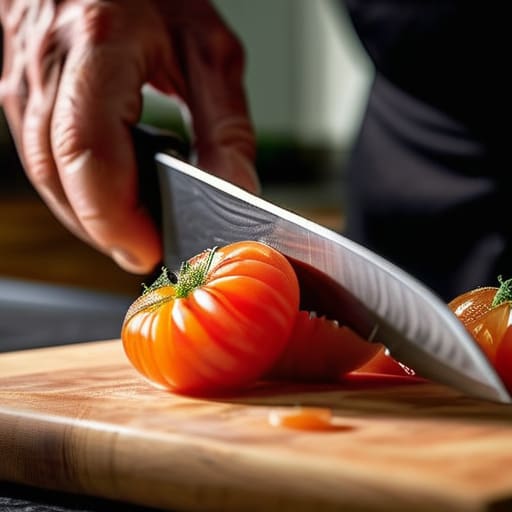
I remember sitting in a cramped corner of a bistro in Chicago years ago, watching a chef work. He didn’t just cut; he moved with a rhythmic, almost mathematical precision that minimized resistance. It struck me then that most of us approach a cutting board like we’re fighting a battle against our ingredients. We treat a dull blade or a clumsy grip as mere inconveniences, but in reality, they represent a profound breakdown in the mechanical efficiency of the kitchen. When you lack proper knife handling, you aren’t just risking a nick to your finger; you are introducing unnecessary friction into your culinary workflow, turning a fluid process into a series of jagged, interrupted movements.
This friction ripples outward, affecting the very texture of your meal. If you’re bruising delicate herbs or crushing garlic instead of slicing it, you’re altering the cellular structure and releasing bitter compounds prematurely. Mastering these essential kitchen skills for beginners isn’t about performing for an audience; it’s about reducing the systemic noise within your preparation. By treating the knife as an extension of your own kinetic energy rather than a blunt tool of force, you transform the chaotic act of chopping into a streamlined, elegant component of the larger cooking system.
The Feedback Loops of Flavor: Realigning Your Culinary Architecture
- Respect the Salt Gradient: Most home cooks treat seasoning like a single, static event at the end of a process, but salt is actually a dynamic variable. Think of it as a continuous feedback loop; you must introduce it in layers—at the beginning, middle, and end—to allow the mineral to penetrate the cellular structure of your ingredients rather than just sitting on the surface like a superficial layer of dust.
- The Myth of the Crowded Pan: When you overload a skillet, you aren’t just cooking; you are inadvertently triggering a phase transition from searing to steaming. By dropping too many cold elements into a vessel at once, you crash the thermal energy of the system, causing moisture to release and trap heat, which effectively breaks the Maillard reaction you were trying to cultivate.
- The Illusion of Instantaneous Resting: I once watched a friend slice into a perfectly seared steak only to see the juices hemorrhage across the plate like a burst pipe in a city’s water main. That’s a failure of pressure equilibrium. You must allow the protein fibers to relax and redistribute their internal moisture; resting is the period where the system reaches a new, stable state of homeostasis.
- Navigating the Aromatics Bottleneck: We often treat garlic and onions as mere background noise, but they are the foundational nodes of your flavor network. If you introduce them too early into high-heat environments, they burn and turn bitter, introducing “noise” into your system that can’t be filtered out. Time your introductions based on the thermal threshold of each specific ingredient.
- The Acidic Reset: When a dish feels “heavy” or “flat,” your instinct might be to add more salt or fat, but that often just increases the systemic density without adding clarity. Instead, look for the missing catalyst: acidity. A squeeze of lemon or a splash of vinegar acts as a corrective signal, cutting through the lipid layers and re-balancing the sensory input of the entire dish.
Navigating the Culinary Labyrinth
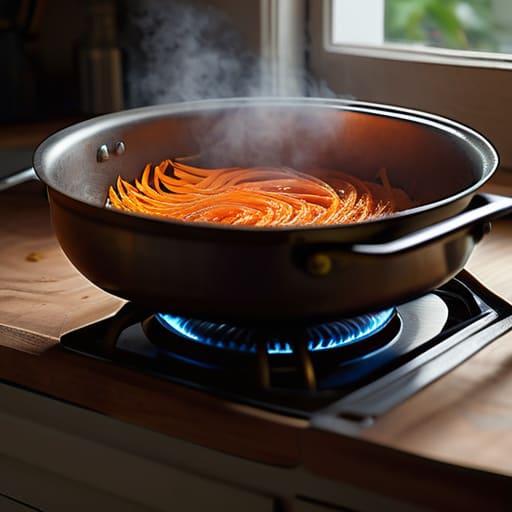
As we step back from the steaming pots and the scattered herbs, it becomes clear that a failed recipe is rarely the result of a single, isolated error. Instead, it is usually a breakdown in the delicate equilibrium of your kitchen’s ecosystem. We’ve seen how the chaotic fluctuations of heat can disrupt the intended outcome, much like a sudden surge in a power grid, and how the mechanical friction of a dull knife can throw an entire preparation out of sync. When you view these mishaps not as personal failures, but as systemic misalignments in the interplay of temperature, tool, and technique, the kitchen transforms from a place of frustration into a laboratory of controlled variables.
Ultimately, my goal isn’t for you to achieve a state of perfect, sterile culinary precision, but rather to develop an intuition for the dynamic flow of the cooking process. The next time a sauce breaks or a sear goes awry, don’t reach for the takeout menu in defeat; reach for your curiosity. Treat the error as a new data point in your personal map of flavors and physics. Once you learn to read the hidden patterns within the steam and the sizzle, you stop merely following instructions and start mastering the beautiful chaos of creation itself. Happy exploring.