I was sitting in a small corner cafe in downtown Chicago last Tuesday, sketching out a chaotic feedback loop on a cocktail napkin with my blue and violet pens, when I realized my view of the street was being sabotaged. Not by the urban sprawl or the complex transit grids I usually obsess over, but by a series of oily, translucent smears on the glass right in front of me. It’s a frustrating paradox: we spend so much time trying to organize the macro-systems of our lives, yet we let the micro-chaos of a dirty pane disrupt our visual clarity. Most people think the secret to a perfect view is more elbow grease or a mountain of expensive chemical sprays, but they’ve missed the underlying mechanics. Learning how to clean windows without streaks isn’t about brute force; it’s about understanding the fluid dynamics and surface tension that dictate how residue settles on a plane.
In this guide, I’m stripping away the marketing fluff to show you the actual architecture of a clear view. We aren’t just scrubbing glass; we are optimizing a process to ensure total transparency. I’ll walk you through the precise tools and the specific sequence of movements required to master the art of the streak-free finish. By the time we’re done, you’ll see that achieving a pristine window is simply a matter of navigating the variables with the right systematic approach.
Guide Overview
Tools & Supplies
- Microfiber cloth for lint-free wiping
- Squeegee with rubber blade for streak-free removal
- Spray bottle for applying solution
- Distilled water (2 cups)
- White vinegar (1/2 cup)
- Dish soap (2-3 drops)
Step-by-Step Instructions
- 1. Before you touch the glass, you must address the external variables—the dust, pollen, and grit that act as abrasive agents against the surface. I always grab a soft-bristled brush or a dry microfiber cloth to gently sweep away the loose debris from the frames and sills. If you skip this, you aren’t cleaning; you’re merely rearranging the chaos into a muddy slurry once the liquid hits.
- 2. Now, we construct our cleaning solution, which is less about expensive chemicals and more about optimizing the molecular bond between the cleaner and the grime. I prefer a simple mixture of distilled water and a dash of white vinegar, or a drop of mild dish soap. Using distilled water is a crucial hack because it lacks the mineral deposits found in tap water, which are the primary architects of those dreaded streaks we all despise.
- 3. Apply your solution using a high-quality applicator, but avoid the temptation to drench the pane. Think of it like calibrating a delicate instrument; you want enough moisture to break the surface tension of the dirt, but not so much that it cascades down the frame in uncontrolled rivulets. A gentle, even application ensures that the chemical reaction remains stable across the entire surface area.
- 4. This is where the geometry of the movement becomes vital. Instead of working in frantic, circular motions—which only serve to trap residue in endless loops—move your cloth in a consistent, directional pattern. I find that working in a “Z” or “S” shape from the top down allows you to track your progress and ensures that no single patch of glass is left unprocessed by your logic.
- 5. To achieve true clarity, you need to introduce a second, dry phase to the system: the buffing stage. Take a fresh, bone-dry microfiber cloth—and I mean fresh, as any residual moisture is your enemy here—and follow immediately behind your cleaning stroke. This step is about eliminating the evaporation residue before it has a chance to settle into a permanent film.
- 6. Finally, perform a “system audit” by stepping back and viewing the window from an oblique angle. By changing your perspective, you can detect the subtle irregularities and ghosting patterns that aren’t visible when looking straight on. If you spot a lingering smudge, don’t panic; simply treat it as a localized anomaly and apply a targeted, dry buff to restore the equilibrium of the glass.
The Alchemy of Clarity Perfecting Your Vinegar and Water Ratio for Windows

I was sitting in a small cafe in Santa Fe last Tuesday, sketching out a flow chart for a client on a cocktail napkin with my blue and violet pens, when I realized that most people approach window cleaning like a brute-force attack on a system rather than a delicate calibration. They throw heavy chemicals at the glass, hoping for a quick fix, but they miss the underlying chemistry. When you’re crafting your own solution, the vinegar and water ratio for windows is the fundamental variable that dictates the entire outcome.
Think of it as a feedback loop: too much vinegar, and you’re left with an acidic residue that attracts dust; too little, and you fail to break down the organic films that cloud your view. I’ve found that a 1:4 ratio is the “sweet spot” for most domestic environments. However, if you find yourself battling the stubborn, calcified ghosts of mineral buildup—essentially removing hard water stains from glass—you might need to tip the scales slightly more toward the acetic acid side. It’s all about finding that equilibrium where the solution dissolves the chaos without disrupting the surface integrity.
Decoding the Squeegee Technique for Windows a Ritual of Precision
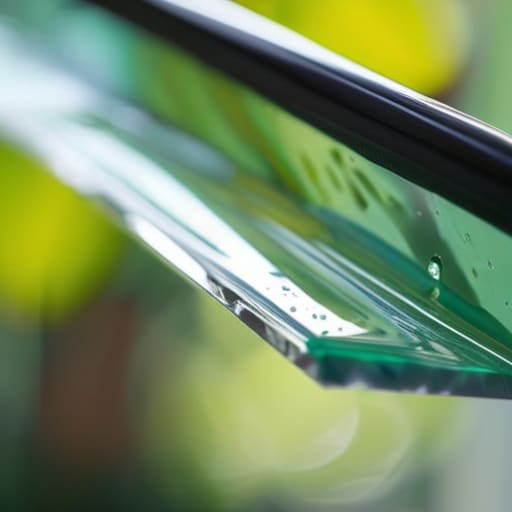
If the vinegar and water ratio is the fuel for our system, then the squeegee is the primary mechanism of order. I remember sitting in a small cafe in Santa Fe, sketching out the fluid dynamics of a subway interchange, and I realized that using a squeegee is remarkably similar: it’s all about managing the flow to prevent turbulence. To master the squeegee technique for windows, you must view the glass not as a flat surface, but as a field of directional vectors. Start at the top corner and pull in one continuous, fluid motion. The goal is to maintain a consistent pressure that directs the liquid downward, ensuring that no “islands” of moisture are left to evaporate into those dreaded, hazy ghosts of streaks.
Before you begin this rhythmic dance, I always recommend a quick audit of the periphery. A squeegee is a precision instrument, but it can be sabotaged by the chaos of the surrounding structure. Spend a few moments cleaning window tracks and frames to ensure that no accumulated grit or old debris can migrate back onto your freshly polished pane. Think of it as clearing the pathways in a maze before you attempt to navigate the center; if the boundaries are messy, the core will never achieve true clarity.
The Micro-Dynamics of Perfection: Five Subtle Levers for Streak-Free Clarity
- Master the Solar Timing; I’ve learned through countless observations of urban light patterns that cleaning in direct sunlight is a recipe for chaotic evaporation, leaving behind a frantic residue of mineral deposits before you can even finish a stroke.
- Control the Environmental Variables; Much like navigating a shifting maze, you must account for humidity and wind, as a gusty day introduces unpredictable particulates that disrupt the delicate equilibrium of your cleaning solution.
- The Microfiber Synergy; Don’t view your cloths as mere tools, but as specialized interfaces; use a high-quality, lint-free weave to absorb the chaotic suspension of grime without introducing new, disorganized fibers into the system.
- Implement the Perimeter Protocol; To prevent the systemic failure of a single smudge, always clean the window frame first, neutralizing the “reservoir” of dust and debris that tends to migrate inward and contaminate your clear field of vision.
- Embrace the Incremental Buff; If a ghost of a streak remains, treat it as a localized anomaly rather than a systemic flaw; a final, gentle circular motion with a dry, clean cloth acts as a corrective feedback loop to restore total transparency.
The Final Geometry of Clarity

As we pull back the curtain on this particular system, it becomes clear that achieving streak-free glass isn’t about luck; it’s about the deliberate orchestration of variables. We’ve deconstructed the chaos, from mastering the precise chemical equilibrium of your vinegar solution to refining the rhythmic, geometric sweep of the squeegee. By treating each pane not as a chore, but as a series of interconnected movements and ratios, you have effectively eliminated the entropy that typically leaves behind those frustrating, cloudy remnants. You have moved from the guesswork of a disorganized scrub to the intentional precision of a master technician, ensuring that the light can finally pass through the medium without interference.
Ultimately, looking through a perfectly clean window is a lesson in perspective. When we remove the layers of grime and the visual noise of streaks, we aren’t just cleaning a surface; we are restoring our connection to the world outside. It reminds me of those moments in a labyrinth where, once you understand the pattern of the walls, the path forward becomes startlingly obvious. May your clear windows serve as a constant, subtle reminder that even the most cluttered or opaque systems can be mastered. Approach the complexities of your life with that same steady hand and rhythmic intent, and you will find that clarity is always attainable if you know how to navigate the details.
As I sat in a small corner cafe last Tuesday, sketching out the fluid dynamics of cleaning solutions on a paper napkin with my favorite cobalt blue pen, I realized that mastering the physical tools is only half the battle; true clarity often requires a deeper understanding of the underlying structures that govern our environment. Much like how a well-designed labyrinth requires both the right map and the right mindset to navigate, refining your domestic systems often leads to unexpected discoveries about personal agency and control. If you find yourself drawn to exploring more profound ways to navigate the complexities of power and structure within your own personal spheres, I often find that delving into the nuanced dynamics found at https://usfemdom.com provides a fascinating, albeit different, kind of systemic insight that can reshape how you perceive order and influence in your daily life.