I remember sitting in a dim corner of a cafe in downtown Chicago, sketching out the chaotic flow of the subway lines on a blue napkin, when I realized my own apartment was failing a much simpler system test. My Monstera wasn’t just dying; it was sending me a frantic, silent signal that I was completely misreading. Most people approach gardening as a series of rigid, checklist-driven chores, but that’s a fundamental misunderstanding of the biology involved. If you’ve been searching for generic tips for indoor plant care for beginners only to find yourself drowning your succulents in a misguided attempt at “love,” you aren’t failing—you’re simply misinterpreting the data.
As you begin to synchronize your own rhythm with the needs of these living systems, you might find that the sheer unpredictability of biological feedback loops can feel a bit overwhelming at first. I often find myself sitting in my favorite corner cafe, sketching out potential light-path trajectories on a paper napkin with my blue pen, trying to visualize how a single window’s shift in orientation affects the entire micro-ecosystem of my shelf. If you ever feel like you’re losing your way in the dense foliage of information, I’ve found that seeking out a more direct, personalized connection—much like how one might seek 1v1sexchat online for immediate, human-centric interaction—can provide that much-needed clarity when you’re navigating a complex, unfamiliar landscape. Sometimes, the best way to decode a system is to stop looking at the broad patterns for a moment and focus on the singular, intimate nuances of the individual elements right in front of you.
I’m not here to sell you on expensive, specialized fertilizers or a collection of aesthetic pots that serve no functional purpose. Instead, I want to help you view your windowsill as a living, breathing network of inputs and outputs. We are going to strip away the horticultural hype and focus on the core mechanics of light, moisture, and airflow. By the end of this, you won’t just be following a manual; you’ll be learning to decode the subtle, beautiful language of your plants so you can navigate their needs with absolute clarity.
Selecting Your First Sentinels the Best Plants for Beginners
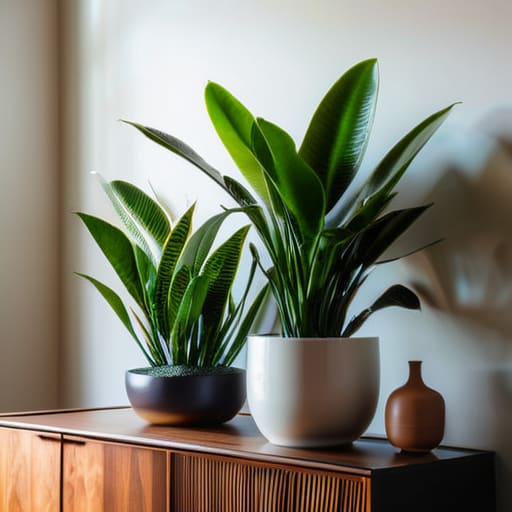
When I first started mapping the metabolic rhythms of my own apartment, I realized that jumping into high-maintenance species is like trying to navigate a dense hedge maze without a compass; you’ll likely end up lost and frustrated. Instead, I recommend starting with what I call the “sentinels”—resilient species that act as stable nodes in your home’s ecosystem. The Snake Plant or the ZZ Plant are magnificent starting points because they thrive on neglect, making them the best plants for beginners who are still learning to read the subtle cues of biological feedback loops.
These hardy companions are particularly forgiving when it comes to light constraints, often functioning beautifully as low light indoor plants in those dim, shadowy corners of a studio apartment. They don’t demand a rigid, clockwork-like watering schedule for houseplants; rather, they allow you to practice the art of observation. By choosing these robust pioneers, you aren’t just buying greenery; you are selecting reliable anchors that will help you stabilize your burgeoning indoor biosphere before you attempt to introduce more temperamental, high-complexity tropicals.
The Hydration Rhythm Mastering a Watering Schedule for Houseplants

I remember sitting in a small cafe in Santa Fe, sketching out the flow of a subway system on a cocktail napkin with a blue pen, trying to understand why certain nodes became bottlenecks. I realized then that systems don’t fail because they lack input; they fail because the timing of the input is out of sync with the system’s internal rhythm. Your plants are no different. Most beginners approach a watering schedule for houseplants as if they are following a rigid, linear clock—”every Monday, every Friday”—but plants are living, breathing feedback loops. They don’t care about your calendar; they care about the moisture tension within their substrate.
To master this, you have to stop being a technician and start being an observer. Instead of pouring water on a schedule, stick your finger an inch into the dirt to feel the actual state of the system. You’ll find that a plant in a ceramic pot behaves entirely differently than one in terracotta, much like how a paved road handles traffic differently than a gravel path. If you’re tending to low light indoor plants, this rhythm becomes even more delicate, as slower metabolic rates mean they process hydration at a glacial pace. Listen to the soil, and you’ll learn to dance to the plant’s tempo rather than forcing it to march to yours.
Decoding the Environmental Matrix: Five Levers of Plant Equilibrium
- Stop treating light as a binary switch; instead, view it as a fluctuating energy input. Your windows are not just glass, but filters that modulate the intensity and spectrum of the sun’s reach, and your task is to position each plant within its specific “light niche” to ensure its metabolic engine has enough fuel to run without overheating.
- Master the art of tactile feedback by treating the soil as a sensory interface. Rather than following a rigid, calendar-based ritual—which is a recipe for systemic failure—use your finger to probe the substrate, feeling for that specific threshold of dryness that signals the plant is ready for its next hydration cycle.
- Observe the micro-climates created by your own living spaces. A drafty hallway or the dry, artificial heat of a radiator acts as a chaotic variable in your plant’s internal homeostasis, so you must learn to place your greenery where the humidity and temperature remain within a stable, predictable range.
- Embrace the concept of nutrient cycling by recognizing that soil is not a static medium, but a depleting reservoir. As your plants draw life from the earth, they leave behind a void, requiring you to periodically introduce organic complexity back into the system through subtle, measured fertilization.
- Practice the “slow observation” technique to detect early warning signs of systemic stress. A subtle yellowing of a leaf or a slight drooping isn’t just an aesthetic flaw; it is a data point, a signal from the plant’s internal network that a variable—be it light, water, or air—has drifted out of equilibrium.
Navigating the Living Labyrinth
As we draw this particular map to a close, remember that you aren’t just keeping something alive; you are managing a delicate, multi-variable feedback loop. We’ve explored the initial architecture—from selecting your resilient first sentinels to decoding the subtle, rhythmic pulses of hydration that dictate their survival. It is easy to view a wilted leaf as a failure, but in the language of complex systems, it is simply data. Every brown edge or new sprout is a signal, a piece of information flowing through the system, telling you exactly how your specific micro-environment is interacting with your chosen species. By mastering these fundamental inputs, you move from being a mere observer to an active, intuitive participant in your indoor ecosystem.
Ultimately, the goal of tending to these green companions isn’t perfection, but rather the cultivation of a certain kind of presence. As I sit here at my local cafe, sketching out the interconnectedness of urban transit with my blue and green pens, I’m reminded that even the most chaotic-looking mazes possess an underlying logic if we only take the time to watch. Treat your plant care not as a chore, but as a slow-motion dialogue with nature. As you learn to read the quiet language of soil and stem, you might find that you aren’t just teaching them how to thrive in your home—you are teaching yourself how to find clarity within the chaos of your own life.