Did you know over 70% of Saudis are under 30? This young group is changing Saudi Arabia’s social norms fast. The country’s first cinema in 35 years and mixed-gender events at the AlComedy Club show big changes. My travel stories show how these changes are both surprising and enlightening.
Travelers often face social customs that are very different from their own. This can leave them amazed or confused. Let’s explore some amazing stories that show how different cultures can change our views of what’s normal.
From unexpected restaurant rules to strange driving habits, these culture shocks open our eyes. They show us the wide range of human experiences. Get ready for a journey that will make you see things differently!
Key Takeaways
- Culture shock can affect how we perceive social norms in foreign environments.
- The youthful population in Saudi Arabia is influencing significant cultural changes.
- Travel experiences often reveal surprising customs that challenge our expectations.
- Understanding cultural adaptation can enhance meaningful interactions while traveling.
- Cultural norms regarding behavior, dining, and entertainment vary greatly from country to country.
Understanding Culture Shock in Travel Experiences
Culture shock is a big part of traveling, affecting how we adjust to new places. It was first talked about by Kalervo Oberg in 1954. He said it’s a feeling of anxiety when we face new customs, languages, and social rules.
The Definition of Culture Shock
Culture shock feels like a mix of confusion and feeling alone. It’s hard to communicate, which makes it even tougher. Studies show that the bigger the cultural gap, the more shock we feel.
Common Phases of Adjustment
Oberg’s model talks about four stages of cultural adjustment. First, there’s the Honeymoon Stage, full of excitement and superficial connection. Then comes the Culture Shock Stage, filled with frustration and misunderstandings.
Next, we reach the Gradual Adjustment Stage, where we start to understand and respect the local culture. The final stage, Adaptation, is when we fully accept cultural differences, making social interactions easier.
How Culture Shock Affects Social Norms
Traveling shows how social norms change with culture. Getting involved with locals helps us adapt and feel less shocked. Having friends from the culture makes it easier. But, traveling with family can sometimes make it harder to connect with locals.
Incredible Culture Shock Stories from Around the World
Travel can lead to unexpected moments of culture shock. I’ve heard many stories of people adjusting to new places. These stories show the emotional challenges and strength needed to adapt.
Personal Journeys of Adjustment
A family moved from North Korea to the U.S. in 1977. They faced huge culture shock, like a first-grade classroom with 25 kids. For a child used to small classes, this was a big change.
Many immigrant kids, like me, struggle with social anxiety and speaking. About 20% of us face these challenges when adapting to a new culture.
Unbelievable Experiences Shared by Travelers
Going to the U.S. was not just educational but also financially tough. My family used programs like WIC to help. Around 6.3 million people rely on such support every year.
Later, I went to international schools, which were very different. But moving to a public high school in Gig Harbor, Washington, was a big change. There were few different nationalities, making it a big cultural shift.
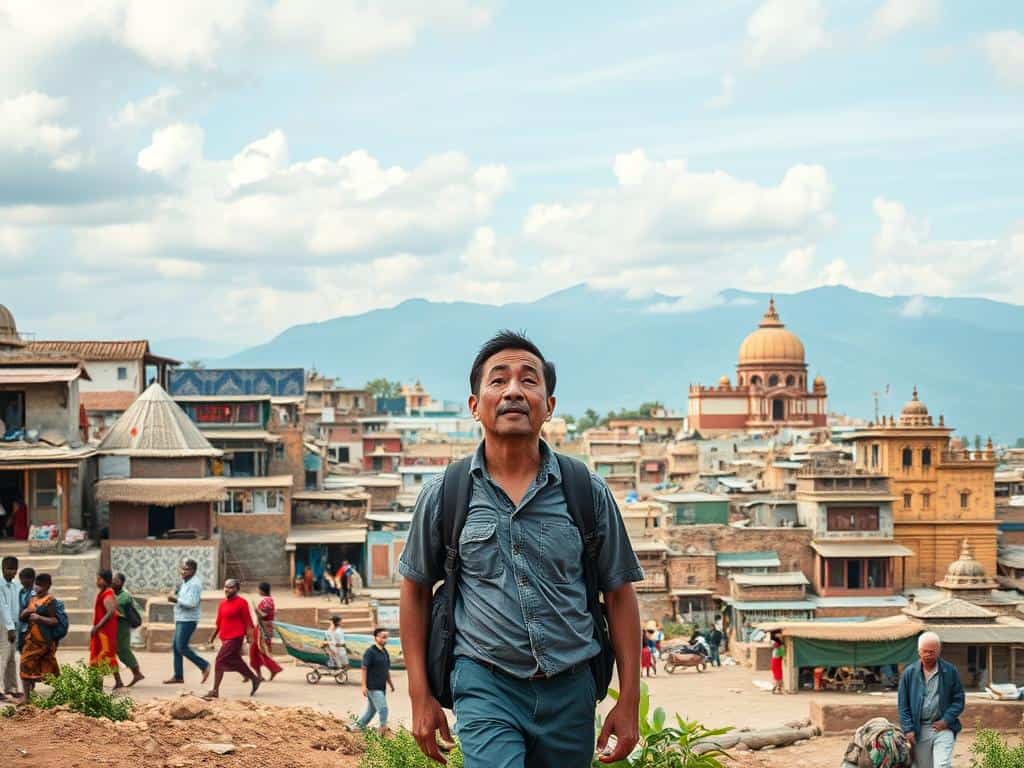
Storytelling is key in processing our experiences. At an event called “Culture Shock,” I heard a story from Michigan. The person moved to Florida and found big differences in climate and social status. These stories show that adapting is not just about learning new customs but also understanding the social context.
10 Wild Culture Shock Stories You Won’t Believe!
Culture shock can surprise anyone, like moving from cities to peaceful rural areas. I’ve heard amazing stories that show how big of an impact it can have. People find new ways of living and face surprises that keep them curious. Here are some stories that highlight the differences between city and country life.
Anecdotes of Rural vs. Urban Living Shocks
One person moved from a busy city to a quiet village. At first, they loved the calm. But soon, they missed the city’s fast pace and services. They found it hard to adjust to the slower life and fewer people.
Meeting the villagers was a big surprise. They had customs that were both confusing and wonderful.
Surprising Customs that Make You Say “Wow!”
A digital nomad from the city visited a small town for the first time. They thought they knew what to expect. But they were amazed by the town’s unique traditions.
Every evening, people came together. They cooked food and shared stories. It was a way to connect and celebrate their community. This experience changed the nomad’s view of rural life.
Conclusion
Culture shock is a common part of traveling that can feel overwhelming at first. Through my travels, I’ve learned that adjusting to new customs and social norms is a powerful way to grow. For example, learning to navigate without public transport information made me appreciate the complexity of adapting to different environments.
Looking back, I see that every cultural experience has added to my understanding of humanity. From learning about mince pies over two Christmases to adapting to late-night outings in Germany, each experience has enriched my view. Seeing students dressed differently than others showed me how varied fashion can be across cultures, teaching me to be more empathetic towards different lifestyles.
Embracing the surprises and challenges of cultural adaptations has broadened my perspective and helped me connect with people from different backgrounds. Every story, big or small, has helped me understand the diverse world we live in. By welcoming these experiences, we grow to appreciate the richness of global cultures.

