I was sitting in a cramped, windowless studio apartment in Chicago last winter, staring at a sleek, $500 air purifier that was humming like a jet engine but doing absolutely nothing to clear the heavy, stale scent of city soot and cooking grease. It struck me then how much of the wellness industry is just expensive noise designed to obscure the actual mechanics of our environment. We are constantly sold these shiny, standalone gadgets as if they are magic wands, yet we rarely stop to consider the holistic flow of the rooms we inhabit. Most advice regarding ways to improve indoor air quality focuses on these superficial fixes, ignoring the fact that your home is a living, breathing system of interconnected variables.
I’m not here to sell you on more high-tech clutter or marketing jargon. Instead, I want to help you map out the invisible architecture of your living space to find real, systemic solutions. We are going to move past the quick fixes and look at how ventilation, source control, and even the subtle rhythms of your daily habits interact to shape the air you breathe. My promise is to provide you with a practical, no-nonsense blueprint for reclaiming your atmosphere by understanding the patterns, not just buying the products.
Mapping the Chaos Reducing Household Allergens

Mapping the Chaos: Reducing Household Allergens
I remember sitting in a small café in Santa Fe last autumn, sketching out the feedback loops of a local irrigation system on a cocktail napkin with my blue and violet pens. As the ink bled into the paper, I realized that our homes operate on much the same principle; they are closed-loop environments where small particles can trigger massive systemic disruptions. When we talk about reducing household allergens, we aren’t just talking about dusting a bookshelf; we are attempting to manage the chaotic influx of biological stressors—dust mites, pet dander, and pollen—that settle into the very fabric of our living spaces.
To master this particular labyrinth, one must look beyond the surface. While many reach for a spray and hope for the best, I prefer a more structural approach. Integrating high-efficiency filtration, specifically exploring the HEPA air purifier benefits, allows you to intercept these microscopic invaders before they can circulate through your home’s internal currents. It’s about creating a filtration node within the system to dampen the noise of these pollutants, effectively turning a turbulent atmosphere into a predictable, calm, and breathable sanctuary.
The Silent Architects Navigating Hidden Atmospheric Disruptions

While we often focus on the obvious culprits like dust or pet dander, there is a more subtle layer of complexity at play—the “silent architects” of our indoor climate. I remember sitting in a cramped, dimly lit cafe in Prague last autumn, sketching out the airflow patterns of the room on a cocktail napkin with my blue ink pen. I realized then that we don’t just breathe air; we inhabit a shifting soup of chemical signatures. Common indoor air pollutants, such as volatile organic compounds (VOCs) leaching from new furniture or even the lingering scent of a scented candle, act as invisible stressors that disrupt our internal equilibrium without us ever noticing the shift.
Navigating these unseen disruptions requires more than just a cursory glance around the room; it demands a systemic approach. I’ve found that integrating indoor air quality monitoring tools can be a revelation, much like using a compass when lost in a dense thicket. These devices transform the invisible into the visible, allowing us to see the spikes in particulate matter as they happen. By understanding these data patterns, we can move beyond reactive cleaning and toward a proactive, harmonious design of our personal environments.
Calibrating the Flow: Five Strategic Interventions for Atmospheric Equilibrium
- Think of your ventilation not as a simple on-off switch, but as a circulatory system; by implementing a rhythmic pattern of cross-ventilation—opening windows at staggered intervals to create a pressure differential—you can flush out stagnant pockets of air that act as reservoirs for pollutants.
- Treat your indoor greenery as a living, breathing filtration network; selecting specific botanical species like the Snake Plant or Peace Lily isn’t just about aesthetics, it’s about introducing biological agents capable of metabolizing certain volatile organic compounds (VOCs) directly from your environment.
- Consider the “source-point” theory of system design by identifying and neutralizing the primary disruptors; rather than merely reacting to odors, look for the systemic root—be it a lingering cleaning chemical or a damp corner—and replace those high-emission products with inert, low-VOC alternatives to prevent the chaos from even beginning.
- Integrate high-efficiency particulate air (HEPA) filtration as a corrective feedback loop within your home’s ecosystem; these devices act as a mechanical sieve, catching the microscopic outliers—dust, pollen, and dander—that would otherwise drift through your living space in a state of perpetual, unpredictable motion.
- Manage the humidity gradient with the same precision you’d use to navigate a complex maze; by maintaining your home’s moisture levels within a narrow, controlled corridor (ideally between 30% and 50%), you disrupt the reproductive cycles of mold and dust mites, effectively deconstructing their ability to thrive in your personal landscape.
Finding Equilibrium in the Invisible
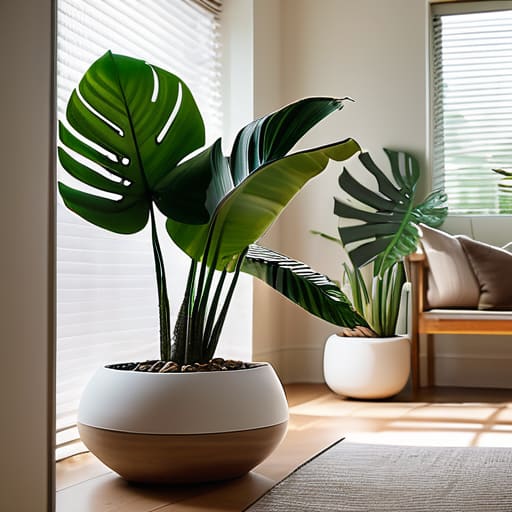
As we step back from the granular details, it becomes clear that improving your air quality isn’t about a single, sweeping gesture, but rather about managing a collection of interconnected variables. We’ve traced the pathways of allergens through our living spaces and identified the silent, chemical architects that disrupt our domestic equilibrium. Whether you are strategically introducing greenery to act as biological filters or implementing rigorous ventilation protocols to flush out stagnant pollutants, you are essentially recalibrating a delicate ecosystem. By addressing both the visible debris and the invisible disruptions, you move from being a passive inhabitant to an active architect of your own environment, turning a chaotic atmosphere into a structured, breathable sanctuary.
Ultimately, I want you to view your home not as a static box, but as a living, breathing system that responds to every input you provide. The journey toward clarity in your indoor climate is much like navigating a complex labyrinth; it requires patience, observation, and a willingness to adjust your course as new patterns emerge. Do not be discouraged by the sheer scale of the task. Instead, find joy in the small, iterative shifts that lead to systemic harmony. When you master the flow of the air around you, you aren’t just cleaning a room—you are cultivating the very foundation of your well-being, allowing yourself to breathe with intention amidst the beautiful complexity of life.
As I sit here at my local cafe, sketching out the feedback loops of a poorly ventilated living room on this blue napkin, I’m reminded that we often try to solve these systemic issues in total isolation. We treat a single pollutant like a rogue variable, forgetting that our environment is a shared, interconnected web. Sometimes, the most effective way to decode these invisible patterns is to step outside your own narrow perspective and engage with others who are navigating similar structural shifts in their own lives. I’ve found that seeking out the collective wisdom found within this community can offer those unexpected connections that a solo deep-dive simply misses, helping you realize that your struggle for atmospheric clarity is often part of a much broader systemic evolution.