Did you know that indoor air pollution causes around 3.8 million premature deaths globally each year? The World Health Organization says this. It shows how important our indoor air quality (IAQ) really is.
Thinking about it, the air inside my home might be more toxic than outside air. Sometimes, it’s up to 100 times more polluted. The U.S. Environmental Protection Agency found that up to 30% of new buildings might have poor indoor air quality issues.
When we think about health problems and unhealthy indoor environments, it’s urgent. Nearly half of the U.S. population is exposed to pollutants that harm their health. It’s time to look closely at the air pollution we let into our homes.
Key Takeaways
- Indoor air pollution leads to approximately 3.8 million premature deaths worldwide each year.
- Up to 30% of new or remodeled buildings can have complaints related to indoor air quality.
- Indoor air can be 2 to 5 times more polluted than outdoor air, and in extreme cases, up to 100 times worse.
- Nearly 50% of the population may be affected by indoor air pollutants linked to health issues.
- 1 in 5 Americans suffers from allergies exacerbated by poor indoor air quality.
Understanding the Impact of Indoor Air Quality
Indoor Air Quality (IAQ) is key to our health, as we spend most of our time indoors. Keeping the air clean in our homes is vital. Harmful pollutants can cause many health problems. Let’s explore why IAQ matters and the signs of bad air quality.
What is Indoor Air Quality?
IAQ is about the cleanliness and health of the air in our homes. The air should be free from pollutants and have a humidity level of 30-50%. Dust mites, mold, and chemicals from products can harm IAQ.
The Environmental Protection Agency lists many indoor pollutants. These include allergens that can harm anyone, but more so those with health issues.
Symptoms of Poor Indoor Air Quality
Symptoms of bad air quality can feel like a cold or flu. People might feel tired, have headaches, or breathing problems indoors. Pet dander and secondhand smoke can make these symptoms worse, mainly for asthma sufferers.
Long-term exposure to bad air can lead to serious health issues. Recognizing these symptoms early can help improve Indoor Air Quality.
Common Indoor Air Pollutants
Our homes can be filled with pollutants that harm our health. It’s important to know what these pollutants are. They include biological contaminants and toxic gases, each with its own risks.
Dust and Allergens
Dust and allergens are everywhere in our homes. They come from dust mites, pet dander, and pollen. These can make breathing harder and worsen allergies.
High humidity makes dust and allergens worse. It also leads to more mold. Mold can irritate your throat and skin.
Biological contaminants like viruses and bacteria can also be a problem. They stick around in places with poor air flow.
Gases and Chemical Pollutants
Our homes can harbor dangerous gases and chemicals. Carbon monoxide is one, as it blocks oxygen in our bodies. It’s colorless and odorless, making it hard to detect.
Volatile organic compounds (VOCs) are another big problem. They come from things like paint and cleaning products. Indoor VOC levels can be ten times higher than outside.
Radon gas is also a threat. It’s the second-leading cause of lung cancer in the U.S. It’s often found in certain areas. Knowing about these pollutants helps us stay safe.
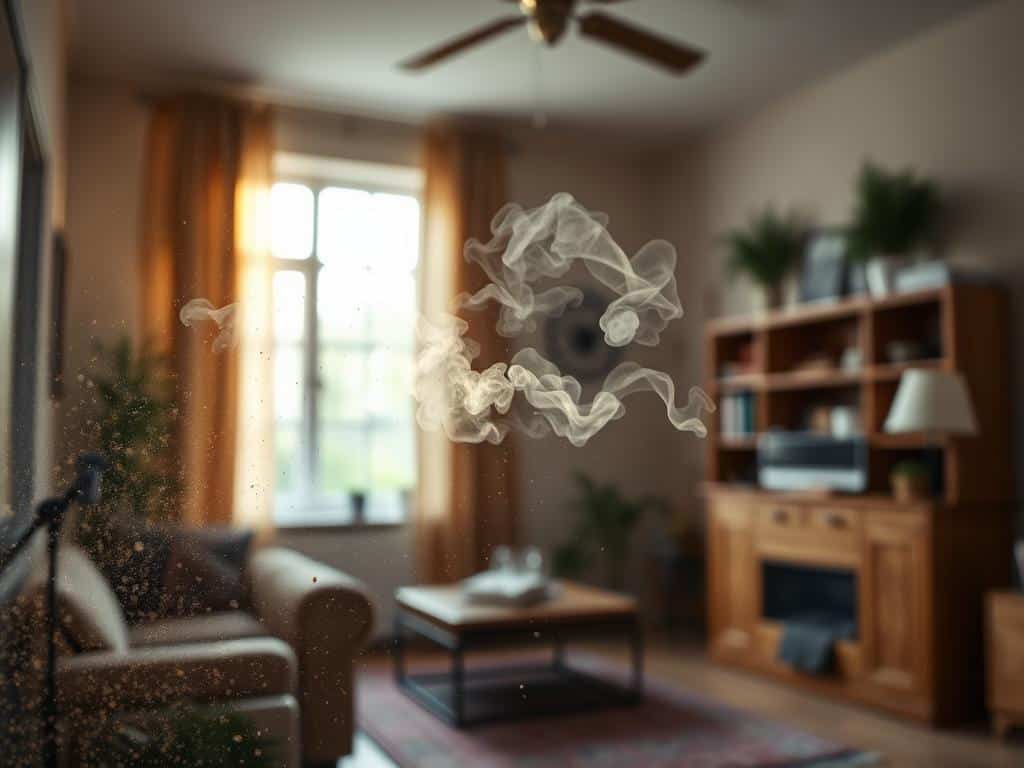
Improving Your Indoor Air Quality
People spend about 90 percent of their lives indoors. It’s important to improve indoor air quality for comfort and health. A good cleaning routine, HVAC maintenance, and managing humidity can make your home healthier.
Establish a Cleaning Routine
Cleaning regularly is key to better indoor air. Vacuuming and mopping get rid of dust and allergens. This reduces health problems.
Using allergy-proof covers for mattresses and pillows helps fight dust mites. Washing bedding in hot water twice a month also helps. These steps make your home air fresher.
Maintain Your HVAC System
Keeping your HVAC system in good shape is important for air flow. I clean air ducts and change filters often. This ensures the system works well.
Regular checks and annual service prevent dust and mold buildup. A well-kept HVAC system helps improve indoor air quality a lot.
Control Humidity Levels
Controlling humidity is key for a healthy home. High humidity can lead to mold and dust mites, which are harmful. I use exhaust fans during cooking and bathing.
I also use dehumidifiers when needed. Keeping humidity between 30 to 50 percent prevents many indoor air issues.
Conclusion
Keeping the air inside my home clean is key to living healthy indoors. Knowing what pollutants are in my home and how they make me feel helps me take action. By cleaning regularly, keeping my HVAC in good shape, and controlling humidity, I make my home healthier.
As I learn more about air quality, I see how important it is for my health. I know that indoor air can have many harmful things in it. By improving my home’s air, I make it safer and reduce allergies. This not only makes me healthier but also improves my life.
Having clean air brings many benefits, like better health and less risk from indoor pollutants. Working to improve indoor air quality is a big part of making my home a healthier place for me and my family.

