Did you know that nearly 50% of UK citizens changed their views on digital surveillance after citizen summits? These events focused on safety. As we live in a more digital world, privacy and safety mix in complex ways. We ask: How much privacy should we give up for safety and national security?
While safety policies protect us, they sometimes cross our privacy rights. In today’s world, security software is key to spotting threats. Yet, many see it as an invasion of privacy. The ban on platforms like TikTok has raised big questions about data access and security.
In this discussion, I invite you to join the conversation. Let’s explore how our data is used. We must be careful in the complex world of surveillance and homeland security.
Key Takeaways
- The balance between privacy and national security is increasingly complex.
- Nearly 50% of participants in citizen summits had a change in opinion about surveillance.
- Concerns about public privacy have risen significantly, highlighting demand for strong safeguards.
- Digital technologies are widely supported for national security but come with privacy concerns.
- Historical events, like Edward Snowden’s leaks, have shaped public discourse on surveillance.
The Interplay Between Privacy and National Security Policies
In today’s world, privacy and national security policies are closely linked. National security measures are key to protecting citizens. Yet, they sometimes cross the line of personal privacy. It’s interesting to see how much the government collects data to keep us safe.
Understanding National Security Policies
National security policies are vital for a nation’s safety and integrity. In the U.S., laws allow the government to collect and monitor data. For example, the Electronic Communications Privacy Act (ECPA) lets law enforcement access personal info without consent. This raises big questions about privacy and government power.
The Role of the Government in Privacy
The government must balance national security with individual rights. Many people don’t know how much data is collected. The 2016 Apple store protests in Boston showed the public’s concern about privacy.
This tension can harm civilians. Overly broad data collection can infringe on civil liberties.
Technological Advancements and Surveillance
Technology has made our lives more connected, but it also means more surveillance. Smart devices, like phones and health trackers, collect data all the time. This makes us think about how our privacy is affected by these devices.
Surveillance in Everyday Life
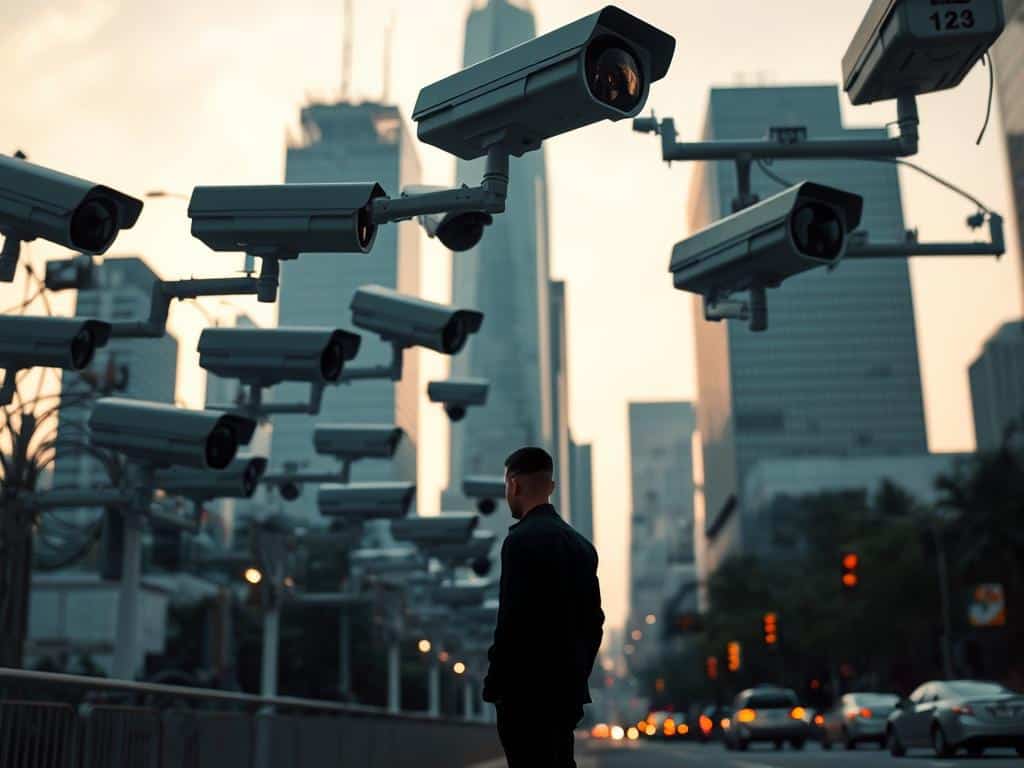
Surveillance is everywhere in our world today. Cameras and sensors watch over public spaces, recording what we do. This makes us question how much data our devices collect without us knowing.
Devices like Amazon Alexa can listen in on our conversations. And fitness trackers like Fitbits can share our health data. This raises big questions about our privacy and who gets to see our information.
The Impact of Health Tracking Devices
Health tracking devices are a big deal in the world of tech and surveillance. They help us keep an eye on our health but also collect our personal data. This data can be used in ways we don’t expect, like in legal cases.
It’s important to know what data these devices collect and how it’s used. This way, we can protect our privacy while enjoying the benefits of new technology.
Terrorism Prevention and Civil Liberties
The fight against terrorism often leads to more police work, affecting our freedoms. It’s key to look at how data use shapes police tactics. This balance is critical.
How Law Enforcement Uses Data
Police use data from our devices and online to stop terrorists. This data helps them solve crimes. But, it also makes us wonder about privacy and surveillance.
The Department of Homeland Security works to keep us safe while protecting our rights. They check on how data is used to prevent abuse.
Balancing Safety and Privacy Rights
Keeping us safe and protecting our rights is getting harder. We need strong security but can’t lose our freedoms. History shows we can be safe without giving up our rights.
Programs like “If You See Something, Say Something®” show how we can help keep safe while respecting our rights. I hope we find a way to keep everyone safe and protect our freedoms.
Conclusion
Looking at privacy and national security today, we see big challenges ahead. With threats from failing states and terrorists, we must think about privacy and security. The line between watching people and protecting their rights is very thin.
Data collection is a big deal. It’s needed for safety, but we must watch its impact on our freedoms. We need to make sure our actions don’t harm our democratic values.
We all have a role in balancing privacy and security. It’s important to find a way to keep us safe without losing our freedom. We must work together to find this balance.

