Did you know almost 50% of dessert lovers in the US prefer sweets from their childhood? This shows how strong nostalgia marketing is, hitting 90s kids hard. They want to relive those happy memories.
Nostalgia isn’t just a look back; it’s a way to deal with today’s stress. Brands from the past are coming back, making us feel like we’re back in simpler times. It’s why 90s kids are diving into retro trends and old favorites.
From toys to snacks, today’s people are looking for comfort in brands from their youth. It’s a way to find peace in a world full of uncertainty.
In a world full of unknowns, going back to childhood memories brings joy and comfort. Brands are bringing back classic products and launching campaigns that make us feel good. It’s not just a trend; it’s a deep need to connect with a happier time.
Key Takeaways
- Almost 50% of US dessert and candy lovers prefer childhood-related sweets.
- Nostalgia marketing effectively connects brands with consumers through emotional ties.
- 90s kids are rekindling their interest in toys and snacks from their youth.
- The rise of retro trends is relevant as brands launch nostalgia-driven campaigns.
- Modern stressors increase people’s desire for comforting childhood memories.
Nostalgia Marketing: A Powerful Influence on 90s Kids
Nostalgia marketing is a clever way for brands to reach out to people, mainly those who grew up in the 90s. It uses the happy memories of childhood to get people excited and to buy more. For me, these feelings of happiness and comfort are what make millennial nostalgia so powerful, leading to more purchases and loyalty.
The Emotional Connection to Childhood
For those of us who lived in the 90s, the connection to that time is very strong. It makes us want to go back to those carefree days. Studies show that nostalgia marketing can make people spend up to 20% more, showing its big impact. Brands that really connect with these feelings build strong bonds with their customers, leading to more support.
How Nostalgia Marketing Strategies Are Compelling
Nostalgia marketing uses those special memories to deeply connect with millennials. Clothing brands bring back the 90s with big denim jackets, graphic tees, and chunky sneakers. These items create a sense of belonging and shared memories, making people happy to relive their past. The comeback of old trends in fashion and food shows how well nostalgia marketing works when done right. Finding out what triggers nostalgia in your audience is key to success.
Examples of Successful Nostalgia Campaigns
Many campaigns have shown how well nostalgia marketing works. Coca-Cola has used nostalgic ads for years, with their polar bears touching both Gen X and millennials. McDonald’s brought back memories with the Adult Happy Meal campaign, featuring toys from childhood. These efforts not only grab attention but also build a strong emotional bond with customers, leading to more sales. Brands like ColourPop and Goldfish have also seen great success with their nostalgic products, proving that tapping into shared experiences can create a lot of buzz.
The Rise of Retro Trends Among Adults
More adults are showing interest in vintage toys and collectibles. This shows a cultural shift towards nostalgia. They seek items that remind them of their childhood, creating a lively market for vintage toys.
This trend combines emotional attachment with a desire for simpler times. It’s a unique mix that’s gaining popularity.
Growing Interest in Vintage Toys and Collectibles
Adults are now looking for their favorite childhood items. They search for original packaging, rare figures, and classic board games. This trend is growing, making the toy collecting world more diverse.
Thrifting has become a favorite way to find these treasures. It lets enthusiasts discover hidden gems in unexpected places.
Impact of the Pandemic on Toy Collecting Trends
The pandemic changed how people shop, leading to a rise in hobbies like collecting vintage toys. It offered a comforting escape back to childhood memories. Online sales soared, showing the power of nostalgia in these times.
This shift created a community united by shared interests and past connections. It’s a testament to the lasting impact of childhood memories.
Record Sales in Adult Toy Purchases
Adults are spending more on toys, showing a deep emotional connection. The sales numbers are impressive, indicating a lasting trend. It’s not just collecting; it’s a cultural movement.
This trend influences fashion, lifestyle, and spending habits. It shows the power of nostalgia in shaping our choices.
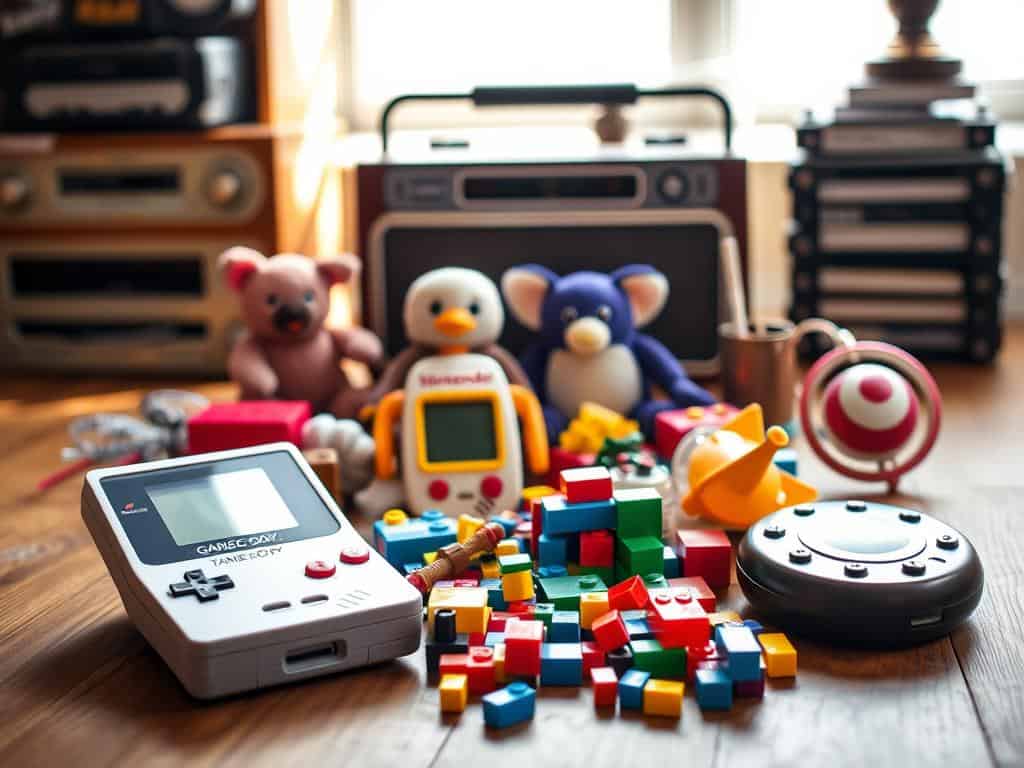
Pop Culture and Its Role in Reviving Childhood Memories
Pop culture is a powerful way to bring back fond memories from our childhood. It touches our emotions and shapes our choices through different forms of media. Old TV shows and movies can stir up deep feelings of nostalgia in those who remember them.
Television Shows and Movies Influencing Nostalgia
Shows like ‘Stranger Things’ use references from the 80s and early 90s to take us back to our youth. They make us feel connected to our past, releasing happy hormones that make us feel good. In tough times, nostalgia marketing helps companies reach out to people of all ages.
The Popularity of Retro Food Products
Retro food has become very popular, with old favorites making a comeback. These foods remind us of our childhood and bring families together. They offer a taste of simpler times and the joy of shared memories.
Events and Collectible Markets Supporting Nostalgia
Nostalgia-themed events and collectible markets are booming. They give fans a chance to meet others who share their interests. These gatherings are a great way to celebrate our childhood memories and make new friends.
Conclusion
Nostalgia marketing has a strong hold on consumers, hitting close to home for those who grew up in the 90s. It brings back fond memories, acting as a comforting escape from today’s fast pace. This emotional link shapes how we buy things, making vintage products and pop culture memorabilia more appealing.
Studies show that 50% of Gen Z and 47% of Millennials feel nostalgic. This shows how far-reaching its impact is. Brands are taking notice, seeing nostalgia marketing as a key strategy.
Baby Boomers, with nearly 70% of U.S. disposable income, are a big target for nostalgia. Campaigns like Pepsi’s rebranding and Pop-Tarts’ Throwback Pack aim to tap into our memories. They aim to boost engagement and sales.
In the future, I believe nostalgia marketing will remain a key strategy for brands. By tapping into our childhood memories, companies can build stronger connections. This approach is likely to continue to grow in importance for years to come.

