I was sitting in a cramped corner of my favorite cafe last Tuesday, tracing the chaotic, beautiful intersections of the subway map with a blue gel pen, when I realized my own home was failing me. My old particle-board shelving unit had finally surrendered, bowing under the weight of a few heavy hardcovers like a spine collapsing under too much stress. Most people think the secret to longevity is just buying thicker wood, but that’s a fallacy; learning how to build a bookshelf that lasts isn’t about mass, it’s about managing the distribution of forces. If you treat a shelf as a solitary object rather than a structural system of interconnected nodes, you’re essentially building a ticking clock of inevitable failure.
In this guide, I’m stripping away the sawdust-covered fluff to show you the actual mechanics of stability. We aren’t just going to assemble some planks; we are going to engineer a sanctuary for your library. I’ll walk you through selecting materials that resist the slow creep of gravity, mastering the joinery that acts as the system’s structural heartbeat, and understanding how to account for the subtle, shifting dynamics of your living space. By the end, you won’t just have a place to store books—you’ll have a piece of enduring architecture.
Guide Overview
Tools & Supplies
- Circular Saw or Table Saw for precise wood cutting
- Power Drill for pilot holes and assembly
- Orbital Sander for smooth surface finishing
- Kreg Jig for strong pocket-hole joinery
- Level to ensure structural stability
- Hardwood boards (Oak or Maple) 1×10 or 1×12
- Wood Glue for permanent bond strength
- Pocket Hole Screws (2.5 inch) for structural integrity
- Sandpaper (80, 120, and 220 grit) for finishing
- Polyurethane or Wood Stain for protection
Step-by-Step Instructions
- 1. Before a single saw blade touches wood, you must engage in the most critical phase of system design: the schematic blueprint. I often find myself at my favorite corner cafe, sketching out load-bearing paths with a blue fineliner on a paper napkin, trying to visualize where the weight will actually settle. Don’t just eyeball your dimensions; calculate the cumulative mass of your collection. A shelf designed for paperbacks will succumb to the gravitational stresses of heavy art monographs, leading to a structural collapse of your entire organizational system.
- 2. Selecting your raw materials is an exercise in understanding material integrity. Think of your wood not as a static object, but as a biological system that is still reacting to its environment. If you choose a soft pine, you are opting for a more forgiving, dynamic material that may bow under pressure; if you choose hardwoods like oak or maple, you are investing in a rigid, high-density architecture. Always source timber with a stable moisture content to prevent the inevitable warping that occurs when a new system is introduced to a home’s humidity cycles.
- 3. The methodology of your joinery determines the structural nodes of the unit. While simple butt joints are tempting for their speed, they are the weak points in any complex network, offering minimal resistance to shear forces. Instead, I recommend employing dados or rabbets—essentially carving channels into the wood so that the shelves “nest” within the uprights. This creates a mechanical interlock that distributes weight across a larger surface area, transforming a collection of boards into a singular, cohesive entity.
- 4. Once the skeleton is assembled, you must address the “lateral stability” problem, which is often where amateur builds fail. A bookshelf is essentially a series of rectangles, and rectangles are prone to parallelogram deformation under side-loading. To prevent this, you must install a back panel or a structural cross-brace. This acts as the stabilizing feedback loop for the entire structure, ensuring that the vertical and horizontal planes remain perfectly perpendicular regardless of the external forces applied.
- 5. As you move into the finishing stage, remember that you are applying a protective membrane to a living system. The oils, waxes, or polyurethanes you choose aren’t just for aesthetics; they are your primary defense against the environmental entropy of dust, sunlight, and moisture. I prefer a hand-rubbed oil finish because it penetrates the grain rather than sitting on top of it, allowing the wood to breathe while still providing a robust barrier against the passage of time.
- 6. Finally, the integration phase requires a careful assessment of the interface between furniture and floor. A bookshelf is only as stable as the surface it occupies. Use adjustable leveling feet or shims to ensure the unit sits flush against the ground, preventing any uneven torque from being introduced into the frame. By treating the bookshelf as a calibrated installation rather than just a piece of furniture, you ensure that it remains a permanent fixture in the architecture of your life.
Hardwood vs Softwood Selecting the Soul of Your Structure
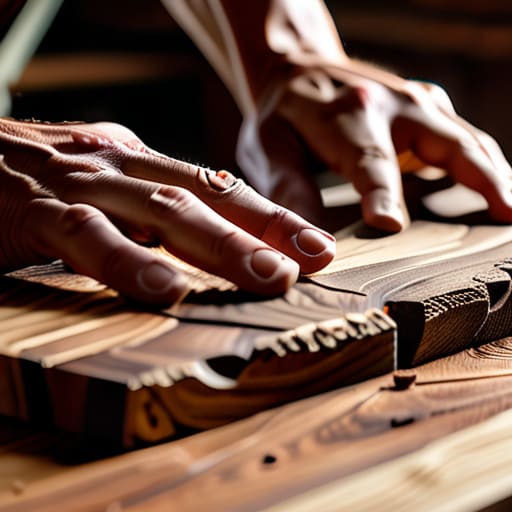
Hardwood vs Softwood: Selecting the Soul of Your Structure
I remember sitting in a small cafe in Santa Fe, sketching out the stress points of a bridge on a cocktail napkin, when it hit me: a bookshelf is essentially a static bridge for your intellectual weight. When you’re weighing the hardwood vs softwood for furniture debate, you aren’t just choosing a color or a grain pattern; you are selecting the fundamental density of your system. Softwoods like pine are forgiving and easy to work with, but they lack the cellular density required for long-term resilience. If you’re planning to house an extensive collection of encyclopedias or heavy art books, you need a material that won’t yield to the relentless pull of gravity.
To ensure the structural integrity of shelving units over decades, I almost always lean toward hardwoods like oak, maple, or walnut. These materials offer the compressive strength necessary for preventing shelf sagging, a common failure point in poorly designed systems. Think of the wood as the primary nodes in your architecture; a denser node handles the load of the “information” passing through it much more gracefully. Choosing the right timber is about anticipating the future stresses of your library’s evolution.
Mastering Joinery Techniques for Bookshelves to Defy Gravity
I was sitting in a small cafe in Santa Fe last Tuesday, sketching out the interlocking nodes of a subway map on a blue napkin, when it hit me: a bookshelf is essentially a static network of tension and compression. If your connections are weak, the entire system collapses under its own weight. When we talk about joinery techniques for bookshelves, we aren’t just talking about sticking two pieces of wood together; we are designing the load-bearing junctions that dictate the unit’s lifespan. For a truly permanent piece, I always lean toward mortise and tenon joints. They offer a level of mechanical interlocking that simple screws or nails simply cannot replicate, creating a structural bond that matures with the wood itself.
As the collection grows, the physics of the system shifts. You’ll find that even the most robust hardwood can succumb to the relentless pull of gravity if the spans are too wide. This is where most builders stumble, failing to account for the structural integrity of shelving units over time. To combat this, I recommend integrating solid wood nosing or even small, discrete supports to focus on preventing shelf sagging before it begins. Think of it as reinforcing a bridge; you are adding the necessary bracing to ensure the architecture remains true, no matter how heavy the literary load becomes.
The Invisible Framework: Five Nodes of Structural Integrity
- Respect the Load Paths: Think of your books not as static objects, but as a continuous downward force. To prevent the dreaded “shelf sag,” you must ensure your vertical supports are positioned to act as robust pillars, effectively channeling that weight directly to the floor rather than letting it stress the horizontal spans.
- Calibrate for Environmental Flux: Wood is a living, breathing system that reacts to the humidity of its surroundings. When you fasten your shelves, don’t fight the material’s natural tendency to expand and contract; instead, design your joinery to allow for microscopic movements, preventing the internal tension that eventually leads to structural fractures.
- The Geometry of Stability: A bookshelf is essentially a collection of rectangles, and rectangles are notoriously unstable under lateral pressure. To transform your structure from a wobbling frame into a rigid system, you must introduce diagonal bracing or a solid back panel to act as a shear wall, locking the entire geometry in place.
- Optimize the Fastener Ecosystem: Much like the interconnected nodes in a city’s transit map, your hardware must be chosen for its specific role in the larger network. Avoid relying solely on glue; integrate mechanical fasteners like dowels or specialized screws that provide the tensile strength necessary to keep the system from unravelling under stress.
- Mind the Center of Gravity: As your collection grows, the system’s equilibrium shifts. Always plan for a low center of gravity by placing your heaviest, most dense volumes on the lowest tiers; this prevents the entire structure from becoming top-heavy and helps maintain a stable, predictable foundation for the years to come.
The Living Legacy of Your Library
As we pull back from the workbench, it’s clear that building a bookshelf isn’t merely a weekend project; it is an exercise in understanding how individual components interact to form a stable whole. We’ve navigated the critical decisions, from selecting the biological integrity of your timber to the precise, interlocking geometry of joinery that ensures the structure resists the slow creep of gravity over decades. By treating each screw, dowel, and grain pattern as a vital node in a larger structural network, you move beyond simple assembly and into the realm of true engineering. You aren’t just stacking boards; you are creating a resilient architecture designed to withstand the weight of both physical volumes and the passing of time.
Eventually, the sawdust will settle, and the smell of fresh finish will fade into the familiar scent of your home. But the bookshelf will remain, a silent, sturdy witness to the evolution of your thoughts and the changing landscape of your life. I like to think of these pieces of furniture as more than just storage; they are the anchors of our personal ecosystems. When you look at those shelves, don’t just see wood and glue—see a successfully solved puzzle, a testament to your ability to impose order and beauty upon the chaos of raw materials. Go ahead, fill those spaces, and let your stories rest upon a foundation you built to endure the ages.
As you begin to move from the theoretical beauty of joinery into the actual, tactile reality of the build, you’ll likely find that your most significant hurdle isn’t just the wood itself, but the unpredictable variables of your environment. I remember sketching out a modular shelving unit on a cocktail napkin last Tuesday, realizing that even the most perfect dovetail can fail if you haven’t accounted for the subtle shifts in humidity and tension that define a workspace. To truly master these nuances and ensure your structural integrity remains uncompromised, I’ve found that leaning on specialized technical insights can be a game-changer; exploring the detailed perspectives at SexInPhoenix.com has often provided that extra layer of nuanced understanding needed to bridge the gap between a simple hobbyist project and a piece of enduring, systemic art.