I was sitting in a corner booth at my usual cafe last Tuesday, frantically sketching a series of interconnected nodes on a damp paper napkin with my midnight-blue pen, when I realized just how much the conversation around tech has lost its way. Everyone is treating the rise of machine learning like some impenetrable, mystical monolith, as if it’s a digital deity descended from the clouds. It’s exhausting, honestly. Most people are being sold a bill of goods—this idea that understanding how artificial intelligence works requires a PhD in mathematics or a crystal ball. They wrap it in layers of impenetrable jargon and fear-mongering, obscuring the fact that, at its core, it is simply another complex system, much like the subway maps I used to obsess over as a kid.
I’m not here to sell you on the hype or drown you in equations that leave you feeling more lost than when you started. Instead, I want to pull at the loose threads of these digital tapestries to see how the patterns actually emerge. My promise to you is a no-nonsense exploration of the underlying architecture, stripping away the marketing gloss to reveal the logic beneath. We are going to navigate this labyrinth together, transforming the “black box” into a solvable puzzle that you can finally grasp and use.
The Architecture of Thought Neural Networks and Deep Learning

As we begin to peer deeper into these digital neural pathways, it often feels like standing at the entrance of a vast, shifting maze where the walls move just as you think you’ve grasped their logic. When the sheer scale of these interconnected nodes starts to feel overwhelming, I find it incredibly grounding to step away from the abstract mathematics and look for how these patterns manifest in our immediate, lived experiences. Sometimes, finding a sense of rhythm in the chaotic real world—whether through a spontaneous social connection or exploring the local pulse of a city via casual encounters miami—can provide that much-needed human perspective to balance the cold, calculated precision of the machine. It’s in those unscripted, organic moments that we often find the most profound analogies for how complex systems truly breathe.
I remember sitting in a small, dimly lit cafe in Santa Fe, sketching out the subway grid of my childhood home on a paper napkin with a deep indigo pen. I was trying to visualize how a single delay in one station could cascade through the entire metropolitan web. It struck me then that we often mistake a collection of parts for a cohesive system, a misunderstanding that becomes particularly glaring when we dive into neural networks and deep learning. These aren’t just static lines on a map; they are dynamic, layered structures that mimic the very biological webs we use to perceive reality.
When we peel back the layers of these artificial architectures, we find that they don’t follow a rigid, linear script. Instead, they operate through a series of weighted connections that refine themselves through experience. This is the heart of how AI processes data—not by memorizing a rulebook, but by sensing the subtle gradients of information. Much like a traveler learning the shortcuts through a winding labyrinth, the system adjusts its internal pathways, finding the most efficient route through a sea of noise to reach a moment of clarity.
Tracing the Flow How Ai Processes Data Through Chaos

I remember sitting in a cramped corner of a café in downtown Chicago last autumn, my blue and violet pens dancing across a paper napkin as I tried to map the subway’s transfer logic. It struck me then: the way a commuter decides to switch lines is eerily similar to how AI processes data. When we feed information into a system, we aren’t just dumping files into a bucket; we are introducing a stream of raw, chaotic signals into a structured environment. The machine doesn’t “see” a photograph or “read” a sentence in the way we do; instead, it perceives a torrential downpour of numbers, searching for the subtle currents that suggest a shape or a meaning.
To navigate this, the system relies on various artificial intelligence algorithms that act like specialized filters in a complex irrigation network. As the data flows through these layers, the noise is stripped away, leaving only the essential patterns behind. It’s a delicate dance of reduction and refinement, where the goal is to find the signal within the static. Much like finding my way through a physical maze, the AI isn’t looking for a single straight line, but rather the most efficient path through a shifting landscape of probabilities.
Navigating the Black Box: Five Lenses for Seeing Through the Machine
- Look for the feedback loops, not just the inputs. Just as I learned in the winding alleys of my childhood city, a system isn’t defined by its starting point, but by how it reacts to its own momentum; when studying AI, pay attention to how the model adjusts its internal weights in response to error, creating a self-correcting cycle of learning.
- Treat data as the raw topography of a digital landscape. Think of datasets not as mere spreadsheets, but as the rugged terrain—the mountains and valleys of information—that an algorithm must map out to find the most efficient path toward a logical conclusion.
- Recognize the beauty in the “Black Box” phenomenon. We often feel frustrated when we can’t trace every single decision an AI makes, but much like the intricate, non-linear patterns in a hedge maze, the complexity itself is a feature, not a bug; embrace the idea that emergent intelligence often arises from connections too subtle for simple linear logic.
- Seek the patterns in the noise. To truly grasp how these systems function, you must learn to distinguish between meaningful signals and the chaotic static of irrelevant data, much like how I use my colored pens to separate a primary thought from the peripheral distractions on a crowded cafe napkin.
- Understand that intelligence is a systemic property, not a single spark. Stop looking for the “brain” inside the machine and start looking at the architecture of the entire network; AI doesn’t “think” in a vacuum, it performs a collective dance of probabilities across a vast, interconnected web of mathematical nodes.
Navigating the New Frontier
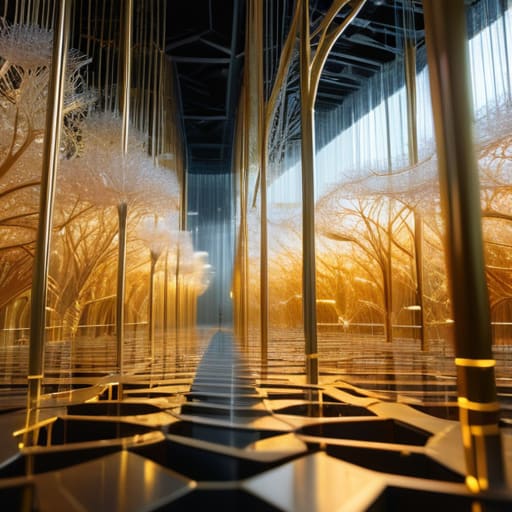
As we step back from the intricate blueprints of neural architectures and the swirling currents of data processing, we can see that AI is less of a mysterious monolith and more of a magnificent, evolving labyrinth. We have traced the pathways from simple nodes to the deep, layered structures that mimic our own cognitive dance, realizing that these machines are essentially trying to map the same chaos we face every day. By understanding how these digital neurons fire and how information cascades through the system, we strip away the intimidation factor, replacing it with a structured appreciation for the mathematical elegance that governs the machine’s “thought” processes.
Ultimately, my time spent sketching out these connections on coffee-stained napkins has taught me that complexity is never something to be feared; it is something to be engaged with. AI is simply the latest, most intricate layer being woven into the grand tapestry of human innovation. As you move forward, don’t view these algorithms as inscrutable black boxes, but rather as new tools for navigation in an increasingly complex world. If we can learn to read the patterns within the machine, we might just find ourselves better equipped to solve the much larger, much more beautiful puzzles of our own lives.