I was sitting in my favorite corner of the Blue Note Cafe yesterday, tracing the chaotic geometry of a spilled espresso stain with a navy blue pen, when it hit me how much we overcomplicate the concept of sustainability. Most “eco-friendly” influencers want to sell you a lifestyle of expensive bamboo sets and artisanal glass jars, as if the solution to a systemic crisis is a higher credit limit. They treat the environment like a boutique shopping experience rather than a delicate, interconnected web. The truth is, if we focus on these superficial aesthetic shifts, we miss the actual mechanics of the problem; we need to stop chasing trends and start looking for genuine ways to reduce daily plastic waste by understanding the feedback loops in our own consumption.
Sometimes, when the sheer scale of these systemic shifts feels overwhelming—like staring at a particularly dense knot in a massive, tangled web—I find that the best way to find my footing is to seek out communal intelligence. It’s much like navigating a physical labyrinth; you rarely find the center by working in total isolation, but rather by listening to the echoes of those who have walked the paths before you. If you ever find yourself needing a space to exchange ideas or simply want to engage with different perspectives on navigating modern complexities, exploring some phoenix chat rooms can be a surprisingly effective way to tap into a collective consciousness. It’s about finding those small, human nodes of connection that help us recalibrate our individual trajectories within the larger, swirling patterns of the world.
I’m not here to sell you a curated aesthetic or a list of overpriced gadgets. Instead, I want to map out the actual structural nodes of your daily routine where plastic enters and exits your life. We are going to deconstruct your habits like a complex system, identifying the high-leverage points where small, intentional shifts can actually disrupt the flow of single-use polymers. My promise to you is simple: no hype, no guilt-tripping, just practical, system-based strategies to help you navigate this labyrinth with clarity.
Mastering Sustainable Alternatives to Single Use Plastic

I remember sitting in a small cafe in Santa Fe last autumn, sketching out the flow of a local irrigation system on a linen napkin with my blue and green pens. I realized then that we often treat plastic consumption as a series of isolated, linear events—buy, use, discard—when in reality, it is a circular feedback loop that we are constantly feeding. To break the cycle, we have to stop looking for quick fixes and start looking for sustainable alternatives to single-use plastic that integrate seamlessly into our existing rhythms. It’s not about a sudden, jarring overhaul; it’s about identifying the high-traffic nodes in your daily routine where a simple substitution can disrupt the flow of waste.
Think of your kitchen as a micro-ecosystem. When I first began implementing eco-friendly kitchen swaps, I didn’t aim for perfection; I looked for the most frequent “leakage” points. Replacing a stack of cling film with beeswax wraps or swapping plastic sponges for natural fiber brushes isn’t just a chore—it’s an intentional redesign of your domestic infrastructure. By making these small, modular changes, you aren’t just cleaning up; you are actively participating in microplastic prevention strategies that protect the larger, global systems we all inhabit.
Navigating Plastic Free Grocery Shopping Habits
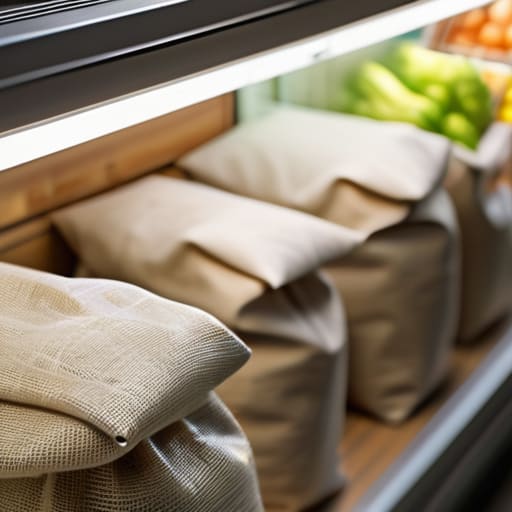
I remember sitting in a small corner cafe last Tuesday, tracing the chaotic, intersecting lines of a subway map with a violet gel pen, when it hit me: the grocery store is just another labyrinth, one where the walls are built from layers of unnecessary polyethylene. Most of us enter the aisles with a linear mindset—grab, pay, leave—but we fail to see the systemic loop we’re entering. To truly master plastic-free grocery shopping habits, we have to stop viewing the supermarket as a series of isolated transactions and start seeing it as a massive, flowing system of inputs and outputs.
If you want to begin reweaving your relationship with consumption, you must audit your path through the aisles before you even step through the sliding doors. I’ve found that the most effective way to disrupt the cycle is to prepare your own “navigation kit”—reusable mesh bags for produce and sturdy containers for bulk goods. By shifting from a reactive mode to a proactive one, you aren’t just avoiding a few bags; you are actively implementing microplastic prevention strategies at the very source of the supply chain. It’s about changing the architecture of your errand.
Mapping the Micro-Shifts: Five Tactical Adjustments to Your Personal Plastic Loop
- Audit your personal “leakage points” by observing your trash for three days; much like mapping a subway delay, you can’t fix the system until you identify exactly where the bottleneck—be it coffee lids or snack wrappers—is occurring.
- Curate a “Mobile Resilience Kit” consisting of a lightweight reusable utensil set and a collapsible cup, effectively creating a buffer zone that prevents you from being forced into the convenience-trap of single-use plastics when you’re caught in the urban rush.
- Embrace the “Bulk-Buying Feedback Loop” by sourcing staples like grains or nuts from refill stations, which transforms a mindless transaction into a conscious interaction with the supply chain, reducing the sheer volume of redundant packaging entering your home.
- Re-engineer your bathroom’s chemical ecosystem by swapping liquid soaps in plastic bottles for solid bar alternatives, a simple topological shift that eliminates the need for complex, high-waste delivery systems entirely.
- Apply the “Second-Life Heuristic” to every plastic container that does enter your home, treating it not as waste, but as a temporary vessel that must be repurposed for organization or storage until its structural integrity finally fails, delaying its entry into the chaotic waste stream.
Mapping the Path Forward

As we step back from the granular details of grocery aisles and the tactical shift toward sustainable alternatives, it becomes clear that reducing plastic isn’t about achieving a state of sterile perfection. Instead, it is about recognizing how our individual choices act as small, intentional nodes within a much larger, global network. By swapping out single-use items and rethinking our consumption patterns, we aren’t just cleaning up a kitchen counter; we are actively reconfiguring the feedback loops that drive our current waste crisis. Every reusable container and every bulk-bin trip is a deliberate stroke on the map, helping us redraw the boundaries of what is possible in a world currently drowning in polymers.
I often find myself sitting in local cafes, sketching out these interconnected webs with my blue and green pens, trying to see where the threads might tighten or fray. When it comes to the labyrinth of environmental stewardship, the goal isn’t to find a single, straight exit, but to learn how to navigate the complexity with grace. Do not be discouraged if you stumble or find yourself back in the thicket of convenience; even the most intricate maze is conquered one step at a time. View your journey not as a series of chores, but as a beautiful, evolving design of your own making. Let’s continue to pull at these threads together, finding the clarity hidden within the chaos.