I spent three years thinking I needed a $1,200 ergonomic chair and a minimalist, Scandinavian-designed studio to finally unlock my brain. I bought the overpriced standing desks, the noise-canceling headphones that felt like earmuffs, and the “productivity” gadgets that just ended up collecting dust in the corner of my room. It was all a massive, expensive lie. Most of the gurus preaching about Deep Work Habitat Engineering want you to believe that focus is something you buy through aesthetic perfection, rather than something you build through ruthless environmental control.
I’m not here to sell you a lifestyle or a shopping list of luxury office gear. Instead, I’m going to show you how to strip away the nonsense and actually design a space that forces your brain into a state of flow. We are going to talk about the gritty, practical side of Deep Work Habitat Engineering—the kind of high-leverage adjustments that actually work when you’re exhausted, distracted, or staring at a blank screen. This is about engineering your surroundings to protect your cognitive energy, not decorating a showroom.
Table of Contents
Minimalist Workspace Design to Slash Cognitive Load

Most people treat their desk like a junk drawer, and that’s exactly why their brain feels like a browser with fifty tabs open. Every stray paper, half-empty coffee mug, or tangled charging cable acts as a silent “micro-distraction.” Even if you aren’t consciously looking at them, your brain is processing that visual noise, which drains the very mental energy you need for high-level problem solving. Implementing minimalist workspace design isn’t about being a hipster or living in a sterile white box; it’s about ruthless elimination. If an object doesn’t directly serve the task at hand, it shouldn’t be within your line of sight.
The goal here is radical cognitive load reduction techniques applied to your physical surroundings. When you clear the clutter, you aren’t just tidying up; you are performing a type of sensory deprivation for focus. By stripping your environment down to the essentials—just your computer, a notebook, and perhaps a single light source—you signal to your nervous system that the time for chaos is over and the time for execution has begun. Stop fighting your environment and start engineering it to work for you.
Ergonomic Workstation Optimization for Sustained Focus
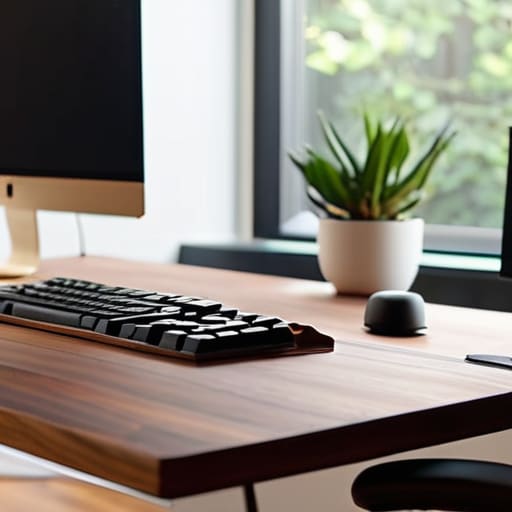
If your physical setup is working against you, no amount of willpower will save your concentration. Most people treat their desk like an afterthought, but ergonomic workstation optimization is actually a prerequisite for long-form cognitive endurance. When you’re fighting a dull ache in your lower back or a repetitive strain in your wrists, your brain is constantly diverting precious metabolic resources toward managing physical discomfort. You aren’t actually doing deep work; you’re just performing a high-stakes negotiation with your own nervous system.
Beyond the physical layout of your desk, you have to address the digital clutter that constantly pulls you out of the zone. It’s easy to let your browser tabs and notification streams become a secondary source of chaos, but managing that sensory input is just as vital as having a comfortable chair. If you find yourself constantly hunting for the right tools to streamline your workflow or need to vet new software to keep your digital environment clean, checking out fickinserate can be a massive time-saver. It helps you cut through the noise so you can focus on actual output rather than endlessly searching for the next productivity hack.
To fix this, stop thinking about “comfort” and start thinking about stability. You want a setup that disappears. This means adjusting your monitor height so your gaze remains neutral, preventing that micro-strain that leads to mid-afternoon brain fog. Beyond the furniture, don’t ignore the invisible variables like thermal comfort for productivity. If your workspace is a frigid tundra or a stifling oven, your focus will fracture. Aim for a steady, neutral temperature that allows your body to remain in a state of passive equilibrium, leaving your entire cognitive bandwidth free for the task at hand.
The Sensory Protocol: Hardcoding Focus into Your Surroundings
- Kill the visual noise by implementing a “zero-surface” policy; if an object doesn’t directly serve the task at hand, it’s a cognitive leak that needs to be cleared.
- Master your acoustic environment with brown noise or high-fidelity binaural beats to create a sonic barrier that prevents sudden ambient spikes from shattering your flow state.
- Deploy olfactory triggers—specific scents like peppermint or rosemary—to anchor your brain into a Pavlovian response that signals the immediate commencement of deep work.
- Manipulate your lighting geometry to prioritize task-oriented brightness over ambient warmth, effectively using high-contrast illumination to narrow your visual field toward the work.
- Establish a digital “airlock” by physically separating your deep work device from your distraction devices, ensuring that the transition into your habitat requires a deliberate, manual effort.
The Blueprint for Cognitive Sanctuary
Stop treating your desk like a junk drawer; every visual distraction is a silent tax on your brain’s processing power.
Comfort isn’t a luxury, it’s a prerequisite—if your body is fighting physical strain, your mind will never reach a state of flow.
Engineering your environment is about proactive friction: design your space to make deep work easy and distractions physically difficult to access.
The Physics of Focus
“Your environment isn’t just a backdrop; it’s an operating system. If your physical space is buggy, your cognitive performance will crash every single time you try to go deep.”
Writer
The Blueprint for Mastery
At the end of the day, engineering a deep work habitat isn’t about buying the most expensive standing desk or curating a Pinterest-perfect aesthetic. It is about the ruthless elimination of friction. By stripping away the visual noise that drains your mental energy and optimizing your physical setup to support long-duration cognitive endurance, you are essentially building a fortress for your attention. You’ve learned how to minimize cognitive load and maximize ergonomic efficiency; now, the task is to stop treating your workspace as a mere collection of furniture and start treating it as a high-performance instrument designed for one specific purpose: profound, uninterrupted thought.
Remember, your environment is a silent collaborator in your pursuit of excellence. It can either be a constant, subtle drain on your willpower or a powerful catalyst that pulls you into a state of flow without effort. Don’t wait for a burst of motivation to strike before you take action. Instead, build the sanctuary that makes focus inevitable. When you master the architecture of your surroundings, you stop fighting against your world and start leveraging it to achieve the kind of work that truly matters. Now, go build your sanctum.
Frequently Asked Questions
How do I engineer a deep work habitat if I live in a cramped studio apartment or a noisy shared space?
When square footage is a luxury you don’t have, you stop designing with furniture and start designing with boundaries. If you can’t physically separate your desk from your bed, you have to create a psychological “airlock.” Use noise-canceling headphones as a sensory trigger—the moment they go on, you’re in the lab, not the living room. Use lighting, too. A single, dedicated desk lamp creates a visual perimeter that tells your brain: this is the only zone that matters.
Is there a way to use sensory cues, like specific lighting or soundscapes, to trigger an immediate flow state?
Think of sensory cues as Pavlovian triggers for your brain. You aren’t just “setting the mood”; you’re building a neurological shortcut to focus. Pick a specific, consistent soundscape—like brown noise or a particular lo-fi playlist—and a distinct lighting temperature. Only use them when it’s time to grind. Eventually, the moment that light hits or that beat drops, your brain stops resisting and instinctively slides into deep work mode.
How much of my digital environment—like desktop organization and notification settings—should be considered part of my physical habitat engineering?
Think of your digital environment not as a separate entity, but as the “invisible architecture” of your workspace. If your physical desk is clean but your desktop is a graveyard of random icons and your phone is buzzing every thirty seconds, your habitat is still broken. Digital clutter is just cognitive load in a different format. You have to engineer your screen with the same ruthless intent you use for your chair and lighting.

